
Author: A Solitary Pagan
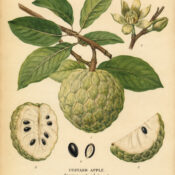

Custard Apple: A Sweet Fruit in Folklore, Paganism, and Witchcraft
The custard apple (Annona squamosa) is a small tropical fruit-bearing tree native to the Americas and now cultivated throughout Asia, Africa, and other warm regions of the world. Known for its green, scaly skin and creamy, sweet flesh, the custard apple has been valued for centuries as both a food source and a medicinal plant. The tree typically grows between 3 and 8 meters tall and produces fragr...
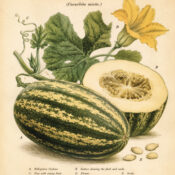

Cushaw: The Golden Gourd in Paganism and Witchcraft
Cushaw is a distinctive variety of winter squash known for its curved neck, pale green stripes, and sweet, golden flesh. Native to the Americas, this hardy plant has been cultivated for centuries by Indigenous peoples and later became a staple crop throughout the southern United States. Valued for its long storage life and abundant harvests, cushaw has long been associated with themes of prosperit...
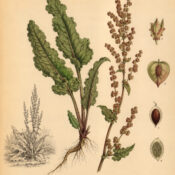

Curly Dock: A Resilient Plant in Paganism and Witchcraft
Curly Dock (Rumex crispus) is a hardy perennial plant found throughout Europe, Asia, and North America. Easily recognized by its long, wavy-edged leaves and tall stalks of reddish-brown seeds, it often grows in meadows, roadsides, and disturbed soils. Although many people consider it a common weed, Curly Dock has a long history of practical and spiritual use. Traditionally, Curly Dock has been val...
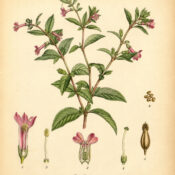

Cuphea: A Vibrant Plant in Nature, Paganism, and Witchcraft
Cuphea is a genus of flowering plants that belongs to the loosestrife family, Lythraceae. Native to the Americas, particularly Mexico, Central America, and parts of South America, Cuphea includes more than 250 species. Many varieties are prized for their brightly colored flowers, which appear in shades of purple, pink, red, and orange. Some species, such as Cuphea ignea, are commonly known as ciga...
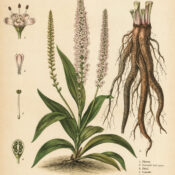

Culver’s Root: A Sacred Herb in Paganism and Witchcraft
Culver’s Root (Veronicastrum virginicum) is a tall, elegant perennial plant native to North America. Recognized by its slender spikes of white, pink, or pale lavender flowers, it grows naturally in meadows, prairies, and woodland edges. Historically, Indigenous peoples used Culver’s Root for medicinal purposes, particularly as a digestive aid and cleansing herb. The plant later became known among ...
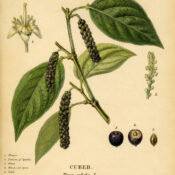

Cubeb: A Magical Spice in Paganism and Witchcraft
Cubeb (Piper cubeba), sometimes called tailed pepper or Java pepper, is a climbing plant native to Indonesia and other parts of Southeast Asia. Its small, dark berries resemble black peppercorns but are distinguished by a tiny stalk or “tail” attached to each fruit. Historically, cubeb was valued as both a culinary spice and a medicinal herb, traded across Asia, the Middle East, and Europe for cen...
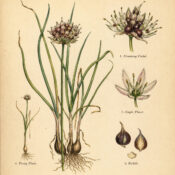

Crow Garlic: A Wild Plant of Protection and Purification
Crow Garlic (Allium vineale), also known as wild garlic, field garlic, or vineale garlic, is a hardy perennial plant that belongs to the onion family. Native to Europe, Asia, and parts of North Africa, it has since spread widely throughout North America and other regions. The plant is easily recognized by its slender, hollow leaves, strong garlic scent, and clusters of small bulb-like structures t...
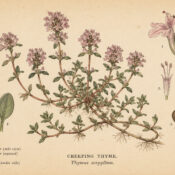

Creeping Thyme: A Fragrant Herb in Nature, Paganism, and Witchcraft
Creeping Thyme (Thymus serpyllum) is a low-growing, perennial herb known for its tiny aromatic leaves and delicate pink to purple flowers. Native to Europe and parts of Asia, it spreads across the ground in dense mats, making it a popular choice for rock gardens, pathways, and pollinator-friendly landscapes. The plant thrives in sunny locations with well-drained soil and is valued for its hardines...
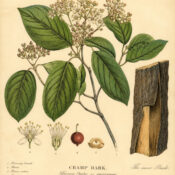

Cramp Bark: A Protective and Healing Plant in Paganism and Witchcraft
Cramp Bark (Viburnum opulus) is a deciduous shrub native to Europe, North Africa, and parts of Asia. Known for its clusters of white flowers and bright red berries, it has long been valued in traditional herbal medicine. The bark of the plant, harvested primarily from the stem and branches, is especially prized for its ability to ease muscle spasms and cramps, giving rise to its common name. Herba...
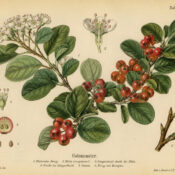

Cotoneaster: A Hardy Shrub in Nature, Paganism, and Witchcraft
Cotoneaster is a genus of flowering shrubs and small trees belonging to the rose family (Rosaceae). Native to parts of Europe, Asia, and North Africa, these plants are admired for their dense branches, small oval leaves, delicate white or pink flowers, and bright red berries that appear in autumn and winter. Many species of Cotoneaster are popular in gardens because they are easy to grow, tolerate...
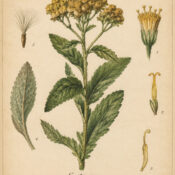

Costmary: The Fragrant Herb of Tradition, Paganism, and Witchcraft
Costmary (Tanacetum balsamita), sometimes known as alecost or Bible leaf, is a perennial herb belonging to the daisy family. Native to parts of Asia and widely cultivated throughout Europe and North America, it is valued for its soft, silvery-green leaves and pleasant minty-balsamic fragrance. The plant typically grows between 2 and 4 feet tall and produces clusters of small yellow flowers during ...
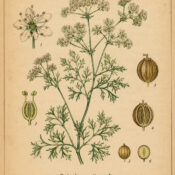

Coriander Seed: A Fragrant Herb of Magic, Protection, and Prosperity
Coriander seed comes from the coriander plant, scientifically known as Coriandrum sativum. This aromatic annual herb belongs to the parsley family and has been cultivated for thousands of years across Europe, Asia, North Africa, and the Middle East. While the fresh leaves are commonly called cilantro, the dried fruits of the plant are known as coriander seeds. These small, round seeds have a warm,...