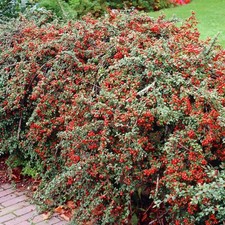
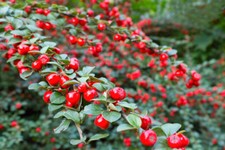
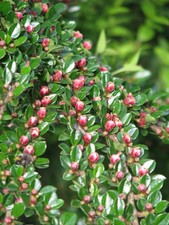
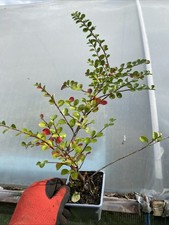
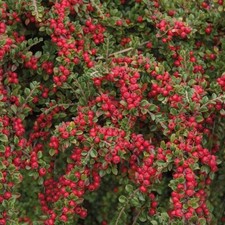
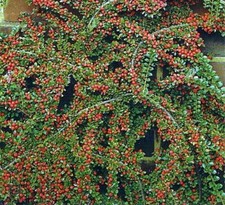
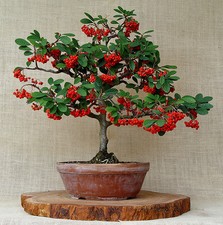
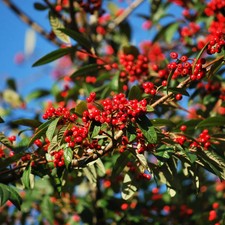
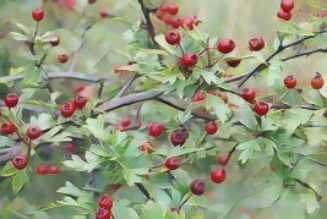
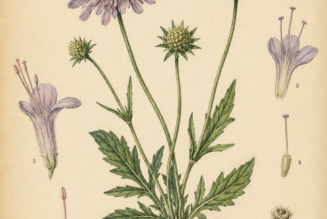
Cotoneaster is a genus of flowering shrubs and small trees belonging to the rose family (Rosaceae). Native to parts of Europe, Asia, and North Africa, these plants are admired for their dense branches, small oval leaves, delicate white or pink flowers, and bright red berries that appear in autumn and winter. Many species of Cotoneaster are popular in gardens because they are easy to grow, tolerate a variety of conditions, and provide food and shelter for birds and other wildlife.
In nature, Cotoneaster is valued as an important habitat plant. Its flowers attract bees and other pollinators, while its berries serve as a food source for birds during colder months. Because of its resilience and ability to thrive in difficult environments, the shrub is often associated with endurance, adaptability, and protection.
Although Cotoneaster does not hold the same widespread mythological significance as plants such as oak, ash, or hawthorn, some modern pagan and folk-magical practitioners have incorporated it into their spiritual practices. In contemporary paganism, the plant is often viewed as a symbol of perseverance, stability, and the ability to flourish despite challenges. Its evergreen or semi-evergreen nature in some species further connects it with continuity and the cycle of life.
In witchcraft and folk magic, Cotoneaster may be used in protective workings. The dense, interwoven branches can symbolize barriers against negative influences, making twigs or leaves suitable for charms, protective wreaths, or boundary spells. The bright red berries are sometimes associated with vitality, life force, and seasonal transitions, especially during autumn and winter rites.
Some practitioners place sprigs of Cotoneaster near doorways or windows as symbolic guardians of the home. Others include the plant in rituals focused on resilience, personal growth, and overcoming obstacles. As with many magical plant associations, these uses are largely based on symbolism, intuition, and modern spiritual traditions rather than extensive historical records.
Today, Cotoneaster remains a valued ornamental and wildlife-friendly plant whose qualities of strength, protection, and endurance have earned it a modest but meaningful place in contemporary pagan and witchcraft practices.