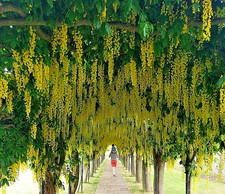
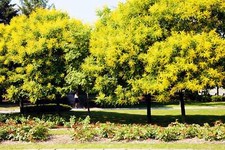
The Golden Chain Tree (Laburnum anagyroides), admired for its cascading clusters of brilliant yellow flowers, has long captured the imagination of those who practice modern paganism and witchcraft. Although it is not among the most commonly used sacred trees in historical European folklore, its striking beauty and symbolic qualities have earned it a place in some contemporary magical traditions. Practitioners often associate the tree with transformation, hidden wisdom, and the balance between beauty and danger.
One of the most significant aspects of the Golden Chain Tree is its symbolism. The hanging flowers resemble chains or flowing streams of golden light, leading some pagans to view the tree as representing abundance, the sun’s life-giving energy, and the interconnectedness of nature. During seasonal celebrations such as Beltane, its vibrant blossoms may be appreciated as reminders of fertility, growth, and the peak of spring’s vitality.
In modern witchcraft, the Golden Chain Tree is sometimes included in meditation or visualization practices. Some practitioners believe sitting near the tree or contemplating its blossoms can inspire inner reflection, personal transformation, and spiritual insight. The tree’s dramatic appearance also makes it a symbolic focal point for rituals centered on change, courage, or overcoming personal obstacles.
An equally important part of the tree’s symbolism comes from its toxic nature. Every part of the Golden Chain Tree, especially its seeds, contains poisonous alkaloids and should never be consumed. In magical symbolism, this duality—beautiful yet dangerous—serves as a reminder that power requires wisdom and respect. Some witches interpret this as representing the ethical responsibility that accompanies magical practice and the understanding that not everything appealing is safe to use.
Rather than harvesting parts of the tree, many practitioners prefer simply to observe it, sketch it, photograph it, or meditate beneath its branches while respecting the natural environment. This approach reflects a broader pagan emphasis on honoring living plants without causing unnecessary harm.
It is important to note that many beliefs surrounding the Golden Chain Tree in witchcraft come from modern spiritual traditions and personal practice rather than documented ancient pagan customs. As with many plants used in contemporary magical paths, its meanings continue to evolve through individual experience, symbolism, and reverence for the natural world.