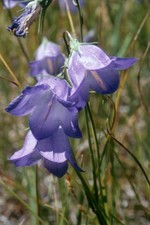
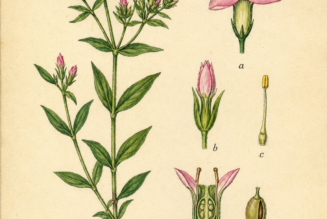
Delicate, graceful, and often swaying gently in the summer breeze, the Harebell (Campanula rotundifolia) has long been associated with mystery, enchantment, and the hidden realms of nature. Found growing on heathlands, cliffs, meadows, and ancient grasslands throughout Britain and Europe, this beautiful blue wildflower has earned a special place in the folklore and magical traditions of many Pagans and witches.
In Celtic folklore, Harebells were often known as fairy flowers. It was believed that where Harebells grew, the veil between the human world and the realm of the Fair Folk was especially thin. Picking the flowers without permission was sometimes thought to offend the fairies, while hearing their delicate bells ring was said to be an omen that the fairy folk were nearby. For this reason, many modern Pagans prefer to admire Harebells in the wild rather than gather them unnecessarily.
Within witchcraft, Harebell is commonly associated with intuition, communication with nature spirits, and spiritual awareness. The flower’s gentle appearance reminds practitioners that great power often lies in quietness rather than force. During meditation, some witches visualise a circle of blooming Harebells to create a peaceful, protected space in which to seek guidance from ancestors, spirits, or the natural world.
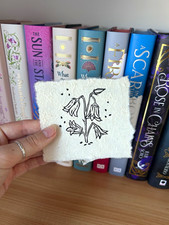
The plant is also connected with truth and honesty. In some traditions, carrying an image or dried blossom of Harebell is believed to encourage truthful speech and help reveal hidden motives. Because of this symbolism, it may be placed upon an altar during rituals concerned with justice, clarity, or resolving misunderstandings.
Many solitary Pagans include Harebell in seasonal celebrations, particularly those honouring the height of summer. Its delicate blue flowers symbolise freedom, hope, and the beauty of untamed landscapes. Rather than harvesting the plant, practitioners often leave small offerings nearby, expressing gratitude to the spirits of the land and acknowledging the sacredness of wild places.
Although Harebell appears in folklore and magical practice, there is no historical evidence that it possesses supernatural powers. Its importance is symbolic, rooted in centuries of stories, local customs, and personal spiritual experience rather than scientific fact.
Whether admired as a fairy flower, a symbol of gentle wisdom, or a reminder of humanity’s connection with the natural world, Harebell continues to inspire many modern Pagans and witches who seek magic in the quiet beauty of Britain’s wild landscapes.