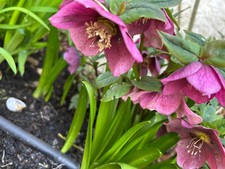
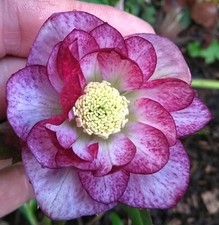
Green Hellebore (Helleborus viridis) is a perennial flowering plant that has long been associated with folklore, mystery, and magical traditions. Native to parts of Europe, it has attracted attention not only for its striking green blossoms but also for its historical reputation as a plant of power. In many forms of modern paganism and witchcraft, Green Hellebore is viewed symbolically rather than as a practical herb due to its toxicity.
Historically, hellebore species were believed to possess the ability to drive away harmful spirits, break curses, and purify spaces of negative influences. These beliefs can be traced to ancient Greek and European folklore, where the plant was regarded as both protective and dangerous. Its dual nature—beautiful yet poisonous—made it a fitting symbol of transformation, boundaries, and hidden knowledge.
Within contemporary pagan practices, Green Hellebore may be incorporated into symbolic rituals that focus on endings, renewal, and personal growth. Practitioners may associate the plant with the waning season, the underworld, or the transition between life cycles. Some traditions consider it appropriate for rituals of release, where old habits, fears, or emotional burdens are symbolically cast away.
In witchcraft, Green Hellebore is sometimes linked to protection, banishment, and psychic awareness in folklore. Rather than handling the fresh plant, many practitioners choose to represent it through artwork, written symbols, or visualizations. This reflects an awareness of the plant’s toxic properties while still honoring its traditional symbolism.
Green Hellebore has also appeared in historical grimoires, herbals, and folklore as a plant connected with magical boundaries and spiritual cleansing. Modern practitioners often interpret these references metaphorically instead of literally, emphasizing inner transformation over physical use. Its appearance during the colder months further reinforces associations with resilience, hidden strength, and the promise of renewal after darkness.
It is important to note that Green Hellebore contains toxic compounds and should never be ingested or applied to the skin without expert knowledge. Today, its role in paganism and witchcraft is primarily symbolic and spiritual rather than medicinal or practical. By respecting both its historical significance and its potential dangers, practitioners can appreciate Green Hellebore as a powerful emblem of protection, transition, and transformation within modern magical traditions.