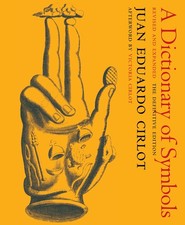
A Dictionary of Symbols by Juan Eduardo Cirlot is an ambitious and intellectually rich exploration of symbolic meanings across cultures, religions, mythology, literature, and art. First published in the mid-twentieth century, the book remains one of the most respected reference works in the field of symbolism. Cirlot, a Spanish poet, art critic, and scholar, approaches symbols not merely as decorative or literary devices, but as expressions of deep psychological, spiritual, and universal truths.
The dictionary is organized alphabetically, making it accessible as a reference text, yet its content encourages reflective and continuous reading. Entries range from common symbols such as water, fire, and trees to more complex ideas like labyrinths, mirrors, and mandalas. Cirlot draws from an impressive variety of sources, including Greek mythology, Christian theology, Eastern philosophy, alchemy, Jungian psychology, and medieval mysticism. This breadth gives the work both academic depth and cultural richness.
One of the most compelling aspects of the book is Cirlot’s ability to connect symbols across civilizations and historical periods. He demonstrates how recurring images carry similar meanings in different traditions, suggesting a shared human imagination. His discussion often reflects the influence of Carl Jung and archetypal psychology, which adds philosophical depth to the interpretations.
However, the book is not always easy to read. Cirlot’s style can be dense, abstract, and highly intellectual, especially for readers unfamiliar with symbolism or mythology. Some entries are brief and cryptic, leaving the reader wanting further explanation. Additionally, because the work was written decades ago, certain interpretations may feel dated or overly universal in light of contemporary cultural studies.
Despite these challenges, A Dictionary of Symbols remains a fascinating and valuable resource for students of literature, art, religion, psychology, and philosophy. It is not simply a dictionary but a gateway into humanity’s symbolic imagination. Readers willing to engage with its complexity will discover a thought-provoking work that deepens understanding of the hidden meanings embedded in culture and human experience.