
Author: A Solitary Pagan


Ill-Wishing in Witchcraft
A curse that is the product of envy, revenge and anger. In earlier times, people commonly blamed their misfortune on the ill-wishing of others. If two people argued and then one suffered a mishap, became ill or had other problems, the other party was suspected of ill-wishing them. Remarks such as “You’ll be sorry” were taken seriously as a form of negative witchcraft. If someone enjoyed a great de...


The Brocken: A Witches Meeting Ground
The Brocken, also called the Blocksberg, was the most famous meeting place for witches in Europe. An old-fashioned poet, Matthison, wrote of it with gruesome awe. The horn of Satan grimly sounds; On Blocksberg’s flanks strange din resounds, And specters crowd its summit high. One wild story even claimed that here on Walpurgis Night (30th April or May Eve), was held the Grand Coven of all the witch...

Witchcraft The Key to Manifestation
It is advantageous that you realize just what is accessible through this technique. I have spent many years charting and understanding the concept of thought and the body of the mindscape as a way of understanding and tapping into what I was sure was there as a latent or uncontrolled power. I have always been subject to random flashes of telepathy and have traveled the timescape through the use of...


Witchcraft & Service
Let’s not confuse the word service with the word servitude. You service the forces with which you interrelate. You are in service to life itself. This is our deity, which we consider both our Goddess and our God. This is Witchcraft at the core. Your service is to the truth of that which you perpetuate and the need to be on call when you are moved by the intelligence of these forces. Nothing is req...

Witchcraft Distribution & Disassociation
The term “harm” is perpetrated through either ignorance or intent. Ignorance is a social problem brought about because the flesh we eat is prepackaged and is often not considered flesh; because our fruit and vegetables are all stacked on the shelves at the local shop and other foods are boxed or jarred or tinned or wrapped in neat containers. These products very often give no hint of their having ...

Witchcraft & Self Analysis
The biological animal and the soul that infuses it has an innate ability to handle its own life and transcend both the internal and the external problems that arise through merely being alive (in this time, within certain conditions). I will begin this section by throwing into the ring a particular word that is crucial in the category of detriment: conditioning. The majority of dysfunctions that a...

Contemplation in Witchcraft
Contemplation is a very natural way of focusing and inspiring the mindscape. It is best accessed through an activity (sometimes repetitive) that doesn’t require the mental concentration of reading or learning (e.g., rocking, watching a fire, simple weaving, unhurried gardening, unhurried cleaning, unhurried, purposeless walking). Contemplation is a time-to-spare active meditation that also gives s...

Mulengro in Witchcraft
Mulengro is the name of an entity that is like an alien barb; one that has become an out-of-control arrow that pierces generation upon generation with its poison. It feeds on its own likeness, and people are its host. Mulengro could be considered to be like the Qliphoth of Qabbalah and the devil that Christianity invented in the Middle Ages to ensure obedience to its dogma. Certain regimes utilize...


Intention in your Witchcraft
Know, at all times, why you are doing what you are doing.Know your own motives well.Exercise caution in your undertakings, as each action, each thought, is to be clearly of your own choosing.Each thought and every action will engender, progressively, a response relative to it for which you are solely responsible.I say progressively because you will become aware, in this manner, of a deepening of s...
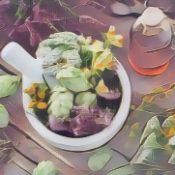

What is Green Witchcraft
Green Witchcraft is a term often used interchangeably with the descriptor Hedge Witch. There are certain similarities between the paths but the fundamental core of each path is very different. Where the Hedge Witch is focused on journeying to the Otherworld and receiving wisdom from the spirits she encounters, the Green Witch’s focus is much more concerned with the physical realm and the Earth on ...

Witches and Witchcraft Moving Forward
Alister Crowley’s “love under will.” When we consider Wilt. The saying goes love under will. But he says do what thou wilt. Turning will…into a verb. This could possibly be of some great importance. It may indicate the opposite of static nature. As a witch, you may be for ever-changing and hopefully learning as you go along Your will could be the desire and all that it entails. Wilt could imply th...

A Witches Personal Power
Personal power is a natural growth process that develops as a result of the life you live in the way of the witch. Others will notice you even when you do not desire to be noticed. Therefore, personal power is the ability to disappear when you want to and appear when you want to. It is not an egoistical phenomenon! It is an energy, a presence about oneself that will require a firm rein for the fir...