
Author: A Solitary Pagan
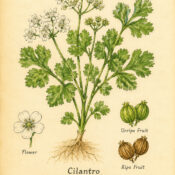

Cilantro and Its Place in Witchcraft
Cilantro, also known as coriander, is a fragrant herb that has been valued for centuries in cooking, medicine, and spiritual practices. Scientifically known as Coriandrum sativum, the plant is native to regions of Southern Europe, North Africa, and Western Asia. While many people recognize cilantro for its bright flavor in foods such as salsa and curry, the herb also carries a long and fascinating...
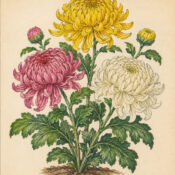

Chrysanthemum and Its Place in Witchcraft
The chrysanthemum is a flower admired across the world for its beauty, symbolism, and spiritual associations. Originating in Asia, especially China and Japan, chrysanthemums have long been connected to themes of life, death, protection, and healing. Their many colors and layered petals make them one of the most recognizable flowers in gardens and rituals alike. In witchcraft and folk magic, chrysa...
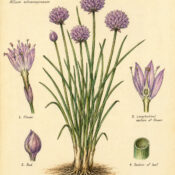

Chive and Its Place in Witchcraft
Chive, a small herb from the onion family, has long held a valued place in both cooking and folklore. Known scientifically as Allium schoenoprasum, chives are recognized by their thin green stalks and delicate purple flowers. While often used to flavor soups, potatoes, and salads, chives also carry a rich history of magical and spiritual symbolism in witchcraft traditions. In European folklore, ch...
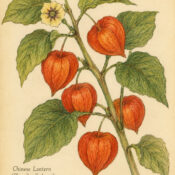

Chinese Lantern and Its Place in Witchcraft
The Chinese Lantern plant, scientifically known as Physalis alkekengi, is a striking perennial recognized for its bright orange, papery husks that resemble glowing lanterns. Native to parts of Asia and Southern Europe, the plant has long been admired for its unusual beauty and symbolic associations. Beyond its ornamental value, the Chinese Lantern has also found a place in folklore, spirituality, ...
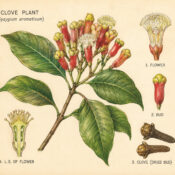

Clove and Its Place in Witchcraft
Clove, derived from the dried flower buds of the clove tree (Syzygium aromaticum), has long held an important place in both traditional medicine and magical practice. Native to the Spice Islands of Indonesia, clove became one of the most valued spices in the ancient world due to its rich aroma, warming flavor, and healing qualities. Beyond culinary use, however, clove has been deeply connected to ...
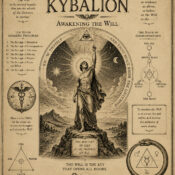

The Kybalion: Awakening the Will
The book does not leave the reader helpless. Its warning is also a prescription. The solution is to awaken the masculine principle: the active will, the questioning force, the power to generate thought from within rather than merely absorb impressions from outside. This requires more than knowing manipulation exists. Awareness alone is not enough. A person can understand hypnosis and still remain ...
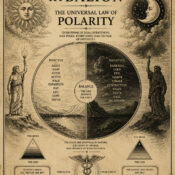

The Kybalion: The Universal Law of Polarity
The Kybalion insists that the masculine and feminine principles exist everywhere: in mind, nature, matter, and the cosmos. “As above, so below.” In the mind, one side projects and the other receives. In nature, similar patterns appear as polarity, attraction, generation, and formation. The book sees the same law operating in atoms, chemistry, gravity, relationships, society, and thought. Whether o...
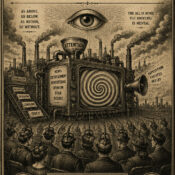

The Kybalion: The Industrial Hypnosis of Media
When The Kybalion was written, mass influence meant a preacher, politician, or speaker addressing hundreds or thousands. Today, a single video, broadcast, or algorithm can reach millions in hours. The mechanism has not changed. Only the scale has. A person sits before a screen. The body becomes still. The eyes fix on moving images. Breathing slows. Emotions are guided by music, pacing, faces, conf...
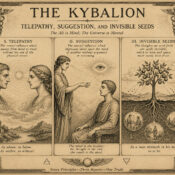

The Kybalion: Telepathy, Suggestion, and Invisible Seeds
The book also connects this mechanism to telepathy. It describes telepathy not as fantasy, but as another form of mental impression. One mind, active and focused, projects an image, feeling, or thought. Another mind, receptive and unguarded, receives it. The receiver may never know the thought came from outside, because once an idea enters the subconscious, it feels exactly like an original though...
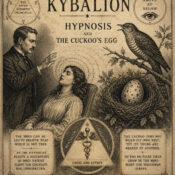

The Kybalion: Hypnosis and the Cuckoo’s Egg
According to The Kybalion, hypnosis is not merely a stage trick or clinical technique. It is the temporary replacement of one person’s active will by another’s. The hypnotist, using a focused and awakened will, impresses ideas directly upon the receptive mind of another person. The conscious mind is bypassed. The subconscious receives the suggestion and begins to act on it. This is not persuasion....
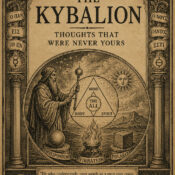

The Kybalion: Thoughts That Were Never Yours
The most unsettling question raised by The Kybalion is simple: how many of your thoughts are truly original? Most people believe they choose their politics, religion, values, ambitions, and opinions. But often these convictions arrived from outside: from family, leaders, teachers, media, culture, or authority figures. A seed was planted, and the subconscious mind grew it until it felt personal. Th...
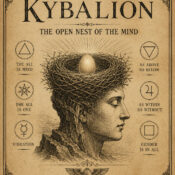

The Kybalion: The Open Nest of the Mind
In The Kybalion, published anonymously in 1908, there is a disturbing image used to explain how foreign ideas enter the human mind: the cuckoo’s egg in the sparrow’s nest. The cuckoo does not build its own nest. It places its egg in another bird’s home. The sparrow, unable to recognize the intruder, warms it, feeds it, and raises it as its own. When the cuckoo chick grows, it pushes the sparrow’s ...