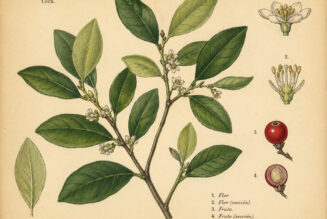
Guaiacum, often called lignum vitae or the “wood of life,” is a slow-growing tree native to the Caribbean and parts of Central and South America. While it is best known for its exceptionally dense wood and traditional medicinal uses, Guaiacum has also found a place in some modern Pagan and witchcraft traditions. Its symbolic qualities, rather than any universally established historical magical role, have made it a valued material for spiritual practices centered on healing, protection, and resilience.
In contemporary Paganism, practitioners often associate Guaiacum with endurance, strength, and longevity because of the tree’s remarkable durability and long lifespan. These characteristics make it a popular symbolic ingredient for rituals that focus on personal growth, recovery from hardship, and maintaining inner balance. Small pieces of the wood may be placed on altars or carried as talismans to represent stability and perseverance during challenging times.
Some witches incorporate Guaiacum into spellwork involving protection and purification. The wood may be included in charm bags, protective sachets, or ritual spaces with the intention of creating spiritual boundaries and promoting a sense of safety. Others use it during meditation or seasonal ceremonies as a reminder of nature’s resilience and the importance of remaining grounded. These practices are largely based on modern magical correspondences rather than documented historical traditions.
Because Guaiacum has a long history in herbal medicine, some practitioners also view it as a symbol of healing. In magical contexts, this symbolism is often expressed through intention-setting rituals rather than physical consumption. Many modern witches emphasize that any medicinal use of Guaiacum should be approached with appropriate medical knowledge and should not be confused with its symbolic role in spiritual practice.
It is important to recognize that beliefs and practices surrounding Guaiacum vary widely among Pagan paths and magical traditions. There is no single, universally accepted set of correspondences, and many associations are personal or developed within specific communities. Additionally, several Guaiacum species are protected because of overharvesting and habitat loss. Ethical practitioners are encouraged to obtain any Guaiacum wood or related products from sustainable, legally sourced suppliers or to use symbolic alternatives that honor both the spiritual significance of the plant and the importance of conserving vulnerable species.