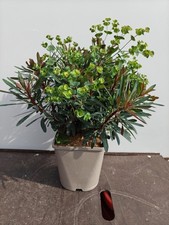
Euphorbia is a large group of flowering plants found in many parts of the world, ranging from tiny ground plants to large shrubs and cactus-like succulents. Although some species resemble cacti, they are not true cacti. Many Euphorbia plants produce a thick, milky white sap called latex, which can be poisonous and may irritate the skin and eyes. Because of this, the plant should always be handled with care. Despite its toxic nature, Euphorbia has long fascinated people for its unusual appearance and resilience, thriving in harsh environments where many other plants cannot survive.
In pagan traditions, Euphorbia is often associated with protection, endurance, and transformation. Its ability to survive in dry, rocky landscapes has made it a symbol of strength and perseverance. Some modern pagans place Euphorbia near the entrance to their homes or gardens as a symbolic guardian, believing it helps keep away harmful energy. While these beliefs are spiritual traditions rather than proven facts, the plant remains popular in nature-based practices.
In witchcraft and modern magical traditions, Euphorbia is sometimes used in protective spells, boundary magic, and rituals designed to encourage personal growth through difficult experiences. Its sharp thorns, found on some species, are seen as symbols of defence and the ability to set healthy boundaries. Practitioners may include the plant in symbolic altar displays or use images of it during meditation rather than handling it directly because of its toxic sap.
Historically, some species of Euphorbia were used in traditional medicine, but many were also known for their dangerous effects if misused. Today, experts strongly advise against using any Euphorbia internally or applying its sap to the skin without professional guidance.
For many pagans and witches, Euphorbia represents the balance between danger and protection, reminding practitioners that nature often combines beauty with caution. Whether admired as a striking ornamental plant or valued as a symbol in spiritual practice, Euphorbia continues to hold a unique place in folklore, modern paganism, and witchcraft. Its enduring symbolism encourages resilience, respect for nature, and an understanding that true strength often comes from learning to protect both ourselves and the spaces we hold sacred.