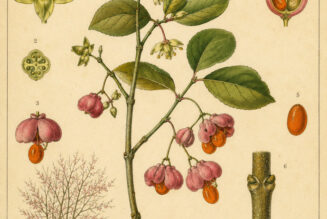
European Holly (Ilex aquifolium) is a striking evergreen tree or shrub native to much of Europe, western Asia, and North Africa. It is easily recognized by its glossy, dark green leaves with sharp, spiny edges and its bright red berries, which appear during autumn and winter. Holly provides an important source of food and shelter for birds and other wildlife, especially during the colder months when other plants have lost their leaves.
Throughout history, European Holly has been admired for its beauty, resilience, and ability to remain green throughout winter. Because it thrives during the darkest time of the year, many ancient cultures viewed it as a symbol of endurance, protection, hope, and the promise of returning light. Long before it became associated with Christmas traditions, holly held an important place in the spiritual practices of many pagan peoples across Europe.
In modern pagan traditions, particularly those inspired by ancient Celtic beliefs, holly is closely connected with the winter season and the celebration of the Winter Solstice, also known as Yule. It is often seen as representing strength, renewal, and the cycle of life, death, and rebirth. Some traditions tell of the Holly King, a symbolic figure who rules the darker half of the year before giving way to the Oak King as daylight begins to increase after the solstice.
In witchcraft and contemporary magical practice, holly is widely regarded as a protective plant. Branches are commonly placed around homes, doors, or windows to symbolically guard against unwanted influences and negative energy. Holly wood has also been used to make ritual tools such as wands because it is believed to represent courage, wisdom, and steadfastness. The leaves and berries may be included in seasonal decorations or altar displays to honor the changing seasons and the enduring power of nature.
Today, European Holly remains one of the most recognizable sacred evergreens in paganism and witchcraft. Whether appreciated for its ecological importance or its rich symbolic heritage, it continues to represent resilience, protection, and the enduring hope that light always returns after the darkest days of winter.




![[x20] Holly Hedging Shrubs | 20-40cms | Ilex Aquifolium |](https://i.ebayimg.com/images/g/I8MAAOSws~ZjaS5j/s-l225.jpg)