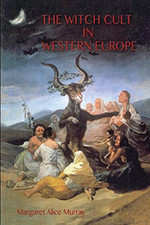
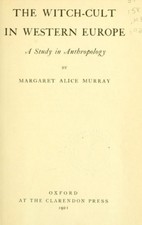
Published in 1921, The Witch-Cult in Western Europe by Margaret Alice Murray is one of the most influential and controversial works in the study of witchcraft and European religious history. In this book, Murray argues that the individuals accused of witchcraft during the medieval and early modern periods were not practitioners of evil magic but members of an organized pre-Christian fertility religion that had survived in secret across Europe. According to her theory, the so-called witches worshipped a horned deity and participated in rituals that were later misinterpreted and condemned by Christian authorities.
One of the book’s greatest strengths is its ambitious attempt to reinterpret historical records from a fresh perspective. Murray carefully examines trial documents, confessions, and folklore, seeking patterns that might reveal an underlying religious tradition. Her writing is clear, engaging, and accessible, making complex historical material understandable to a broad audience. The book also played a significant role in stimulating interest in the history of witchcraft and influenced the development of modern Pagan and Wiccan movements.
However, the book has been heavily criticized by historians and scholars. Murray’s methodology is considered flawed because she often treats confessions obtained under torture as reliable evidence and selectively uses sources that support her conclusions while ignoring contradictory information. Subsequent research has shown that the witch trials were far more complex and were shaped by social, political, economic, and religious factors rather than by the persecution of a unified pagan cult. As a result, Murray’s central thesis is no longer accepted within mainstream academia.
Despite these shortcomings, The Witch-Cult in Western Europe remains an important historical text. Its significance lies less in the accuracy of its arguments and more in its impact on the study of witchcraft and popular culture. The book challenged conventional interpretations and inspired generations of researchers, writers, and spiritual practitioners to explore alternative understandings of European religious history.
Overall, Murray’s work is a fascinating and thought-provoking read. While modern readers should approach its conclusions with caution, the book remains a landmark publication whose influence continues to be felt in both academic and popular discussions of witchcraft.