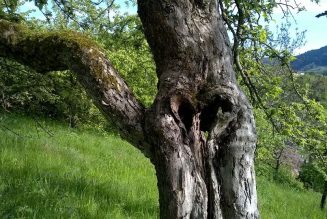
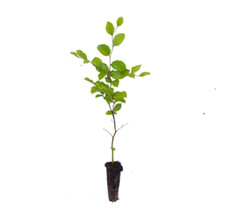
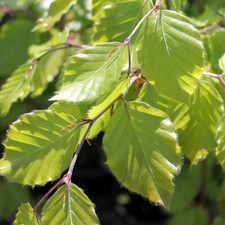
The European Beech (Fagus sylvatica) is a majestic deciduous tree native to much of Europe. It is easily recognized by its smooth grey bark, broad spreading canopy, and glossy green leaves that turn rich shades of gold and copper in autumn. European Beeches can live for several hundred years, creating peaceful woodlands that provide shelter and food for countless birds, mammals, and insects. Their small triangular nuts, known as beech mast, are an important food source for wildlife, while their dense wood has long been valued for furniture, tools, and firewood.
Throughout history, the European Beech has been admired not only for its beauty but also for its symbolism. In many ancient European traditions, it represented wisdom, knowledge, patience, and longevity. Some historians believe there is a connection between the old Germanic word for beech and the word “book,” as early runes and messages were sometimes carved onto thin pieces of beech wood. Whether or not this is the true origin of the word, the association has helped make the tree a lasting symbol of learning and recorded knowledge.
In modern paganism and witchcraft, the European Beech is often regarded as a tree of memory, study, and personal growth. Many practitioners believe it encourages clear thinking, thoughtful decision-making, and a deeper understanding of both the natural world and spiritual practice. Spending quiet time beneath a beech tree is thought to promote meditation, inner reflection, and emotional balance.
Beech wood may be used to craft magical tools, writing tablets, or ritual items connected with wisdom, protection, and ancestral knowledge. The tree’s leaves and fallen nuts are sometimes gathered respectfully for seasonal altars, particularly during autumn celebrations that honour the harvest and the changing cycle of the year. As with all wild plants, only naturally fallen materials should be collected where it is legal and environmentally responsible to do so.
Although there is little historical evidence that the European Beech was the focus of widespread ancient worship, it has become an important symbolic tree in many contemporary pagan and witchcraft traditions. Today it continues to represent learning, resilience, harmony with nature, and the enduring power of wisdom passed from one generation to the next.


![Finland #Mi0623 Used 1967 European White Birch [B179]](https://i.ebayimg.com/images/g/F50AAOSw1M5mFr1K/s-l225.jpg)