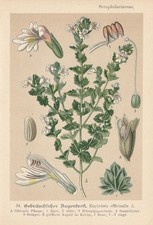
Euphrasia, commonly known as eyebright, is a small flowering plant found growing in meadows and grasslands across Europe and parts of Asia. Recognizable by its delicate white or pale purple flowers marked with yellow centers and fine purple veins, it has long been admired for both its beauty and traditional medicinal uses. Historically, herbalists valued eyebright as a remedy for eye discomfort, believing it could soothe irritation, redness, and tired eyes. Although modern scientific evidence is limited, the plant remains a respected part of traditional herbal medicine.
In folklore, Euphrasia has been associated with clear vision in both a physical and spiritual sense. Its connection to eyesight naturally led many cultures to view it as a symbol of perception, wisdom, and truth. This symbolism carried over into various pagan traditions, where herbs were often chosen for their spiritual qualities as well as their practical uses.
Within modern paganism, Euphrasia is sometimes used in rituals focused on clarity, intuition, and personal insight. Practitioners may include the dried herb in incense blends, herbal sachets, or altar decorations during ceremonies intended to encourage wisdom or reveal hidden truths. Because of its long-standing association with vision, it is often linked to developing inner awareness and seeing situations more clearly rather than predicting the future.
In contemporary witchcraft, especially forms inspired by European folk magic, eyebright is regarded as a supportive magical herb for enhancing focus, improving meditation, and strengthening intuitive practices. Some witches place it in charm bags or use it in spell work designed to remove confusion, promote honest communication, or aid spiritual reflection. It is also sometimes incorporated into cleansing rituals to symbolically clear away illusion and encourage balanced judgment.
As with many plants used in magical traditions, the significance of Euphrasia varies between individuals and spiritual paths. There is no single universal belief about its powers, and many practitioners view its symbolism as more important than any supernatural properties. Whether appreciated as a traditional medicinal herb, a symbol of insight, or a meaningful element in spiritual practice, Euphrasia continues to hold a respected place in the rich traditions of herbal folklore, paganism, and modern witchcraft.