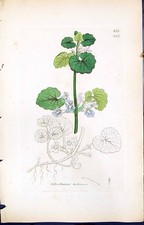
Gill-over-the-ground (Glechoma hederacea), also known as ground ivy, creeping charlie, or alehoof, is a humble woodland herb that has long held a place in European folk magic, pagan traditions, and modern witchcraft. Although often regarded as a common garden plant, its rich history reveals a deep connection with protection, healing, and spiritual awareness.
In traditional pagan beliefs, Gill-over-the-ground was associated with the earth’s restorative energy. Because it spreads quickly across the ground, it symbolized resilience, renewal, and the interconnectedness of nature. Many practitioners viewed the plant as a reminder of life’s continual cycles of growth, decay, and rebirth, making it a meaningful herb during seasonal festivals such as Beltane and Ostara.
In folk witchcraft, the herb was believed to possess protective qualities. It was commonly gathered and hung in homes or placed near doorways to ward off negative influences and unwanted spirits. Some traditions also suggested carrying a sprig of Gill-over-the-ground as a protective charm while travelling through forests or unfamiliar places.
The plant has also been linked with enhancing intuition and psychic awareness. Historical folklore claimed that drinking an infusion or wearing a wreath made from the herb could help reveal hidden truths or sharpen spiritual perception. While these beliefs are rooted in folklore rather than scientific evidence, they continue to inspire many modern witches who use the herb during meditation, divination, or ritual work.
Gill-over-the-ground is often included in spells and rituals focused on healing, prosperity, and cleansing. Its fragrant leaves may be added to herbal sachets, incense blends, or ritual baths intended to remove stagnant energy and encourage emotional balance. Some practitioners also place the herb on altars dedicated to nature spirits or local land deities as an offering of gratitude and respect.
Today, contemporary pagans and witches generally value Gill-over-the-ground not because of supernatural proof, but because of its symbolic significance and its connection to centuries of folklore. As with many magical herbs, its power is found in the meaning practitioners assign to it, the intention behind its use, and the enduring relationship between people and the natural world. Whether growing wild in a woodland or flourishing in a garden, Gill-over-the-ground remains a cherished symbol of protection, healing, and the quiet magic of nature.