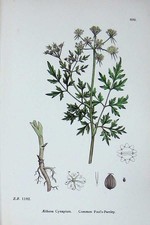
Fool’s Parsley (Aethusa cynapium) is a small flowering plant that belongs to the carrot family. It closely resembles garden parsley, which has earned it the name “Fool’s Parsley.” Although it may look harmless, the plant is poisonous and should never be eaten. Throughout history, its deceptive appearance has made it a symbol of illusion, hidden dangers, and the importance of wisdom and careful observation.
In traditional folklore, Fool’s Parsley was often viewed with suspicion. Because it could easily be mistaken for an edible herb, it became associated with trickery and false appearances. This reputation naturally found its way into various forms of folk magic and later pagan and witchcraft traditions, where plants are often valued for their symbolic qualities as much as their practical uses.
In modern paganism and contemporary witchcraft, Fool’s Parsley is not one of the most commonly used magical herbs. Instead, it is usually appreciated as a symbolic plant rather than one that is handled directly. Many practitioners associate it with protection against deception, revealing hidden truths, and reminding themselves to look beyond surface appearances. It can represent the lesson that not everything is as it seems, encouraging patience and careful judgment before making important decisions.
Some witches include Fool’s Parsley in discussions of baneful or cautionary plants, alongside other poisonous species that symbolize transformation, boundaries, and respect for nature’s power. Because of its toxicity, it is generally not burned as incense, brewed into teas, or used in skin preparations. Instead, practitioners may work with photographs, botanical illustrations, or simply meditate on the plant’s symbolism rather than using the living plant itself.
Fool’s Parsley also serves as a reminder that nature contains both healing and harmful plants. This balance reflects a common belief in many pagan traditions that light and shadow exist together, and that wisdom comes from understanding both.
Today, Fool’s Parsley remains an intriguing plant whose magical reputation is rooted less in spells and more in the lessons it teaches. Its enduring symbolism of caution, discernment, and hidden truth continues to make it a meaningful subject in modern pagan and witchcraft practices, while also reminding people to respect its poisonous nature.