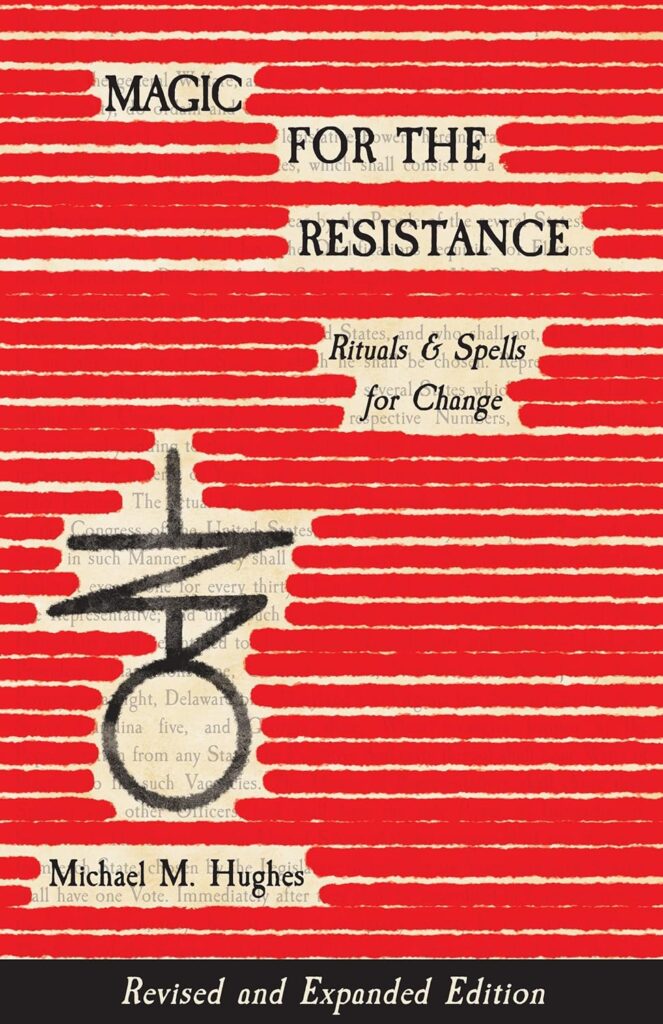
If you’re searching for a book that blends activism with magic, “Magic for the Resistance” by Michael M. Hughes stands out as a compelling and timely resource. Hughes, a seasoned magical practitioner and activist, is perhaps best known for creating the viral “Spell to Bind Donald Trump and All Those Who Abet Him,” which sparked a global movement of magical resistance beginning in 2017. His work has since inspired thousands to use their craft as a tool for social change, and this book serves as both a chronicle and a guide for those eager to join the movement.
The newly revised edition of “Magic for the Resistance” feels especially relevant in today’s climate of political unrest and social upheaval. Hughes doesn’t just offer spells—he provides a thoughtful exploration of the intersection between magic and activism, grounding his advice in both historical context and practical experience. The book opens with a discussion of the roots of magical resistance, referencing revolutionary feminists, the Beat poet Allen Ginsberg, and the magical opposition to fascism during the 1940s. These stories illustrate how magic has long been a force for collective empowerment and social transformation.
One of the book’s greatest strengths is its accessibility. Hughes distills complex magical and political concepts into a crash-course guide that’s easy to follow, even for those new to witchcraft or activism. He explains foundational ideas—such as the ethics of magical intervention, the importance of intention, and the power of collective ritual—in clear, approachable language. The book features fifteen spells, ranging from protection and justice work to spells for courage and community building. Particularly notable are the sections on “guerrilla magic,” which encourage practitioners to take their craft into public spaces, and on organizing public rituals that foster solidarity and visibility.
Hughes also provides practical advice for activists who may be feeling overwhelmed or burned out. He emphasizes the importance of self-care, both magical and mundane, and offers rituals designed to restore energy and maintain resilience. The book includes tips on building supportive magical communities, navigating group dynamics, and using magic as a tool for both personal and collective healing.
However, it’s important to note that the book’s focus on activism and group work may not resonate with everyone. Those seeking a more traditional, solitary, or apolitical magical path might find some of the spells and advice less relevant to their practice. Hughes is clear about his perspective: magic, for him, is inseparable from the work of social justice and collective liberation.
Overall, “Magic for the Resistance” is a powerful and comprehensive toolkit for modern practitioners who want to combine their magical practice with activism. Hughes’s blend of historical insight, practical instruction, and passionate advocacy makes this book especially valuable for overworked and overwhelmed activists, as well as for anyone interested in the history and future of magical resistance. If you’re passionate about social justice and want to use your craft to make a tangible difference in the world, this book is an essential read—offering inspiration, guidance, and a sense of community for the magical activist.