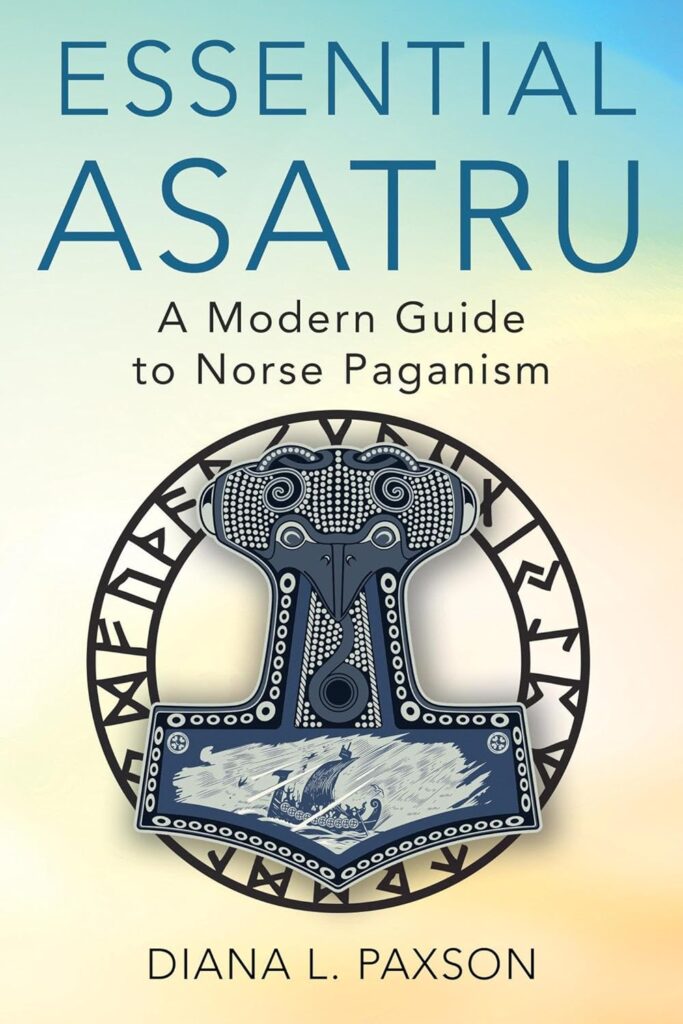
“Essential Asatru: A Modern Guide to Norse Paganism” by Diana Paxson is widely regarded as one of the most accessible and comprehensive introductions to Asatru, a contemporary revival of ancient Norse paganism. This updated edition features a new foreword and expanded content, making it a valuable resource for both newcomers and those already familiar with Norse mythology and spiritual practice. Paxson’s work is often recommended as a foundational text for anyone seeking to understand or participate in Asatru today.
The book begins by tracing the origins of Asatru, offering a clear and engaging overview of its development. Asatru’s roots lie in the pre-Christian spiritual traditions of the Scandinavian and Germanic peoples, including the Vikings. These ancient societies honored a pantheon of gods and goddesses, celebrated seasonal festivals, and maintained a close relationship with the land and their ancestors. With the spread of Christianity across Northern Europe, these traditions were gradually suppressed, but many customs and beliefs survived in folklore and local practices.
In the 20th century, Asatru experienced a revival as people sought to reconnect with their ancestral heritage and the old ways. The movement gained official recognition as a religion in Iceland in the 1970s, and from there, it spread to North America, Europe, and beyond. Today, Asatru is practiced by a diverse and growing community worldwide. Paxson provides historical context for this revival, explaining how modern practitioners draw inspiration from ancient sources such as the Poetic Edda, the Prose Edda, and archaeological discoveries, while also adapting their practices to contemporary life.
Central to Asatru is the veneration of the Norse gods and goddesses. Paxson introduces key deities such as Odin, the wise Allfather; Thor, the protector and bringer of storms; Freyja, the goddess of love, fertility, and magic; and Ostara, associated with spring and renewal. Each deity embodies specific qualities and lessons, and practitioners may choose to honor those whose attributes resonate with their own lives. The book also explores lesser-known figures, such as the Norns, who weave the threads of fate, and the land spirits, or wights, who inhabit natural places.
Asatru is not only about honoring deities but also about living according to a set of core values. Paxson discusses the Nine Noble Virtues—honor, truth, fidelity, discipline, hospitality, self-reliance, industriousness, perseverance, and courage—which serve as ethical guidelines for practitioners. These virtues are drawn from ancient sagas and stories, yet they remain relevant in the modern world. For example, hospitality was essential in Viking society, where travelers depended on the kindness of strangers, and it continues to be a cornerstone of Asatru communities today.
The book offers practical advice for incorporating Asatru into daily life. Readers will find detailed instructions for rituals such as blóts, which are offerings to the gods, ancestors, or land spirits, and sumbels, which are ceremonial toasts that strengthen community bonds. Paxson explains how to create a personal altar, select meaningful symbols, and use everyday objects—such as candles, stones, and seasonal decorations—to honor the sacred. She provides examples of prayers, invocations, and meditations that can be adapted for solitary practice or group gatherings.
Rituals in Asatru often follow the cycles of nature, with celebrations marking the solstices, equinoxes, and other seasonal festivals. For instance, Yule is celebrated at the winter solstice, honoring the return of the sun and the promise of renewal. Midsummer, or Litha, is a time of light and abundance. Other important festivals include Ostara in the spring and Winternights in the autumn, each with its own customs and significance. These celebrations help practitioners attune themselves to the rhythms of the natural world and foster a sense of connection with their ancestors and community.
Paxson also introduces the basics of rune casting, an ancient form of divination and meditation. She explains the historical background of the runes, their symbolic meanings, and simple methods for using them in personal reflection or spiritual guidance. The book encourages readers to approach runes with respect and curiosity, emphasizing that they are tools for insight rather than fortune-telling.
Ethical considerations are an important part of Asatru practice. Paxson addresses questions about personal responsibility, community involvement, and environmental stewardship. She encourages practitioners to reflect on their actions and their impact on others, drawing on the wisdom of the sagas and the example of the gods. The book also discusses the importance of honoring ancestors, both biological and spiritual, and maintaining respectful relationships with the land and its spirits.
One of the strengths of “Essential Asatru” is its balanced approach to tradition and adaptation. Paxson respects the historical roots of Asatru but recognizes that modern practitioners live in a different world. She provides examples of how people today blend ancient customs with contemporary values, such as inclusivity, gender equality, and environmental awareness. The book includes sample rituals and group activities that can be tailored to different settings, from rural gatherings to urban apartments.
The book also addresses common misconceptions about Asatru. Paxson is clear in distinguishing the tradition from extremist ideologies, emphasizing that Asatru is rooted in community, respect, and inclusivity. She highlights the diversity within the modern Asatru movement, with practitioners from many backgrounds and walks of life.
Throughout “Essential Asatru,” Paxson weaves together historical context, literary references, and personal stories. She draws on the wisdom of the Eddas, the lessons of the sagas, and the experiences of contemporary practitioners to create a vivid and relatable portrait of Asatru. Readers will find guidance on everything from starting a study group to celebrating family milestones in a Norse-inspired way.
In addition to its practical content, the book serves as a gateway to further exploration. Paxson provides recommendations for additional reading, online resources, and organizations that support the Asatru community. She encourages readers to approach their spiritual journey with curiosity, respect, and an open mind.
“Essential Asatru” is suitable for personal study, group discussion, or as a reference for teachers and spiritual leaders. Its accessible style and well-researched content make it an excellent starting point for anyone interested in Norse mythology, modern paganism, or the revival of Heathen practices. Whether you are seeking to deepen your understanding of your heritage, connect with nature, or build a meaningful spiritual practice, this book offers a wealth of insight and inspiration.
Ultimately, Asatru is a living tradition—one that honors the past while evolving to meet the needs of the present. Paxson’s guide helps readers see how the values, rituals, and stories of the Norse world can enrich modern life, fostering a sense of belonging, purpose, and connection. “Essential Asatru” stands as a testament to the enduring power of myth, community, and the human search for meaning.