
Author: A Solitary Pagan


Mabon and Its Importance in Paganism and Witchcraft
Mabon is a pagan festival celebrated during the autumn equinox, usually around September 21st to 23rd in the Northern Hemisphere. It marks the point in the year when day and night are of equal length, symbolizing balance, harmony, and reflection. Mabon is one of the eight seasonal festivals, or Sabbats, observed in many modern pagan traditions, particularly Wicca. It is considered the second harve...
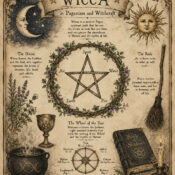

Wicca and Its Influence on Paganism and Witchcraft
Wicca is a modern Pagan religion that emerged in the mid-20th century, largely through the work of Gerald Gardner. It combines ancient spiritual traditions, nature worship, and magical practices into a structured belief system. Although Wicca is relatively new, it has had a significant impact on the revival of Paganism and the modern understanding of witchcraft. One of Wicca’s most important...


Gerald Gardner and His Contribution to Paganism and Witchcraft
Gerald Gardner (1884–1964) is widely regarded as the father of modern witchcraft and played a crucial role in the revival of Paganism during the twentieth century. His work helped bring witchcraft out of secrecy and into public awareness, laying the foundations for what is now known as Wicca, one of the world’s most influential modern Pagan religions. Gardner claimed that he had been initiat...
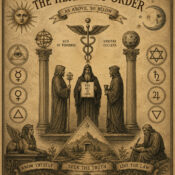

The Hermetic Order and Its Place in Paganism and Witchcraft
The Hermetic Order, most commonly associated with the Hermetic Order of the Golden Dawn, has played a significant role in the development of modern paganism, ceremonial magic, and contemporary witchcraft. Founded in Britain in 1888, the Golden Dawn drew upon a wide range of mystical traditions, including Hermetic philosophy, Kabbalah, alchemy, astrology, and ancient Egyptian symbolism. Its teachin...


The Occult and Its Place in Paganism and Witchcraft
The term occult comes from the Latin word occultus, meaning “hidden” or “secret.” It generally refers to knowledge, practices, and beliefs that explore mysteries beyond the ordinary understanding of the physical world. Throughout history, occult traditions have included divination, astrology, alchemy, ceremonial magic, spirit communication, and other esoteric practices. While often misunderstood, ...


Ceremonial Magic and Its Place in Paganism and Witchcraft
Ceremonial magic is a structured and ritualistic form of magical practice that draws upon symbolism, sacred texts, invocations, and carefully designed ceremonies. Unlike folk magic, which often relies on simple charms and practical spells, ceremonial magic emphasizes formal ritual, spiritual discipline, and the use of symbolic tools such as wands, pentacles, robes, and ritual circles. Its roots ca...
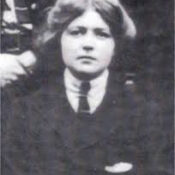

Dion Fortune and Her Place in Paganism and Witchcraft
Dion Fortune (1890–1946) was one of the most influential figures in the development of modern Western esotericism, and her ideas have had a lasting impact on contemporary paganism and witchcraft. Born Violet Mary Firth in Wales, she became an author, occultist, and ceremonial magician whose writings helped shape the spiritual landscape from which modern Pagan and Wiccan traditions emerged. Fortune...


What Is a Pagan Witch?
A pagan witch is a person who practices witchcraft while following a pagan spiritual path. Paganism is a broad term that refers to a variety of nature-based beliefs and traditions, many of which draw inspiration from ancient pre-Christian religions of Europe and other parts of the world. Not all pagans are witches, and not all witches are pagans, but the two paths often overlap. Pagan witches typi...


Crab Apple and Its Place in Witchcraft
The Crab Apple is a small, hardy tree belonging to the genus Malus. Known for its beautiful spring blossoms and small tart fruits, it has long held a place in folklore, mythology, and magical traditions. Native to parts of Europe, Asia, and North America, the Crab Apple has been valued not only for its ornamental beauty but also for its symbolic and spiritual associations. In many ancient cultures...
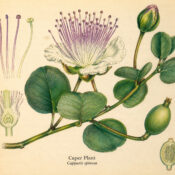

Caper and Its Place in Witchcraft
The caper plant (Capparis spinosa) is a hardy perennial shrub best known for its edible flower buds, commonly called capers. Native to the Mediterranean region and parts of Asia, the plant thrives in rocky, arid environments and has been valued for centuries in both culinary and medicinal traditions. Beyond its practical uses, the caper plant has also held symbolic significance in various folk mag...
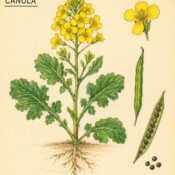

Canola and Its Place in Witchcraft
Canola (Brassica napus) is a bright yellow flowering plant best known for producing canola oil, one of the world’s most widely used cooking oils. Developed from rapeseed through selective breeding to reduce undesirable compounds, canola is valued for its agricultural and nutritional benefits. While it is not among the most commonly cited magical herbs in historical witchcraft traditions, mod...