
Author: A Solitary Pagan
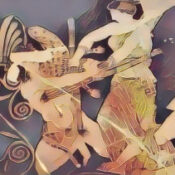

Hecate
Hecate, sometimes spelled Hekate, is an important figure in Greek mythology. She is known as the goddess of the moon, magic, witchcraft, and crossroads. Her worship began in ancient Greece around 800 BC and continued through the Hellenistic period, lasting until about AD 400, when Christianity became more widespread. Hecate is the daughter of the Titans Perses and Asteria. Unlike many other deitie...
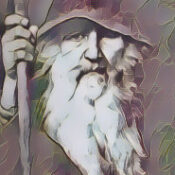

ODIN
Odin, often called the “Master of Ecstasy,” is a central figure in Norse mythology. He is the chief of the Aesir gods and is associated with war, wisdom, magic, poetry, and the dead. Odin’s influence is said to reach across the Nine Worlds, touching the realms of gods, humans, and spirits. His character is complex and sometimes contradictory, which makes him one of the most intriguing deities in N...
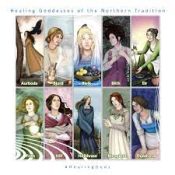

Deities Of Healing
Aesculapius Aesculapius was a healer, son of Apollo and the mortal Corona, who lived during the eleventh centuryBC, and became a god after Zeus killed him with a thunderbolt for raising the dead.The first shrine dedicated to Aesculapius was built in Athens in the fifth century BC by Sophocles.Other shrines followed in rapid succession, the most famous at Epidaurus, which became a majorhealing cent...
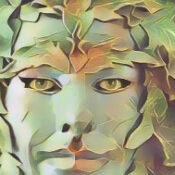

Green Man
The Green Man is a well-known figure in pagan mythology. He represents rebirth, renewal, and the lasting spirit of nature. Most often, he is shown as a horned man whose face appears from a mask of leaves—usually oak, but sometimes ivy, hawthorn, or other plants. This image is found in many cultures across Europe, from ancient Roman and Celtic traditions to medieval Christian architecture. The Gree...
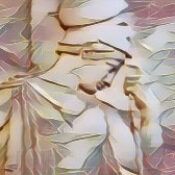

Athena
Athena is one of the most respected deities in ancient Greek mythology. She represents wisdom, strategic warfare, and the protection of cities. According to myth, Athena is the daughter of Metis, who personifies wisdom, and Zeus, the king of the gods. The story says that Athena was born fully armed from Zeus’s forehead, which highlights her connection to both intelligence and battle. People began ...
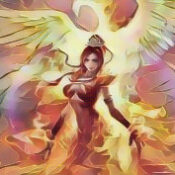

Deities of fire
There are two important fire deities from different traditions: Agni and Hephaestus. Agni is the Hindu god of fire and is a central figure in Vedic tradition. He is seen as the living spark that exists in all life—humans, animals, birds, and plants. Ancient texts describe Agni as present in lightning, sunlight, ritual flames, and even the warmth of home fires. Agni represents both physical and spi...
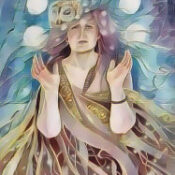

Wise Woman Deities
Beginning your journey into witchcraft can feel overwhelming, but learning about the archetypes and deities that have inspired practitioners for centuries can provide helpful guidance. Among these, Wise Woman Deities are especially important. These goddesses are often linked to transformation, wisdom, and the cycles of life and death. People call upon them during rituals that mark both endings and...
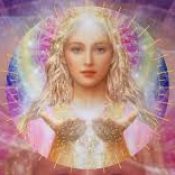

Deities and the Divine
Beginning a journey into Witchcraft often starts with a search for spiritual meaning. Many people find that exploring relationships with deities—such as the Triple Goddess, Cernunnos, Diana, or others from ancient traditions—can be a helpful introduction to the Craft. Each of these deities has a unique history and symbolism. For instance, the Triple Goddess represents life’s cycles, Cernunnos is l...
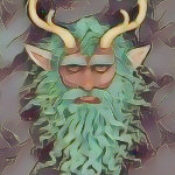

The Hedge Witch – The Gods
In Witchcraft, the gods are often seen as a part of nature, as are we, flowing through time and space. That quality, that energy that we term as the deity is within everything. As it is within everything, nothing is better than anything else. There is inherent animism within Witchcraft, insomuch as we know that one thing is not better than another, that everything has its own inherent value. It is...
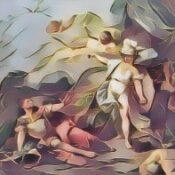

Deity – Life and Death
Life is the force that brings movement and energy to the world. It turns still matter into living things and creates thriving ecosystems. In witchcraft, life is respected as the source of growth, creativity, and renewal. It is seen as a current that flows through everything, both visible and invisible. Death is not just an ending. It is a powerful force of change. Death brings stillness after move...
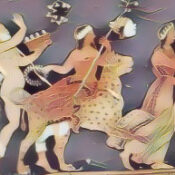

Dionysos
Dionysos, the enigmatic god of wine, ecstasy, and transformation, stands as one of the most complex and captivating figures in Greek mythology. Revered not only for his association with the vine and the intoxicating power of wine, Dionysos embodies the dualities of joy and madness, order and chaos, civilization and wildness. His presence in myth and ritual reflects the profound human yearning for ...
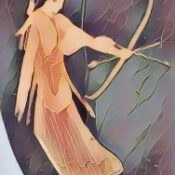

Artemis
When considering the idea of the soul in witchcraft and spirituality, it can be helpful to think of souls as generally falling into two categories: those guided mainly by the mind, and those led primarily by the heart. While everyone has both mental and emotional qualities, one often plays a larger role in shaping how a person makes decisions and views the world. This is not a strict rule, but it ...