
Author: A Solitary Pagan


A To Z of Sacred Sites in the UK
AVEBURY, near Marlborough in Wiltshire, is one of Britain’s most famous stone circles. It was built about 4,000 years ago and once had 180 stones. Today, you can see two stone circles inside a larger outer circle. The main circle is surrounded by a henge, and the southern entrance still has a stone avenue used for processions. BOSCAWEN-UN STONE CIRCLE, near Land’s End in Cornwall, is still used by...


Avebury
Avebury is one of Britain’s most iconic and mysterious stone circles, showcasing the ingenuity and spiritual vision of Neolithic peoples. Dating back around 4,000 years, Avebury originally had about 180 massive standing stones arranged in a complex pattern. Today, visitors can see two prominent stone circles within a vast outer circle. The larger circle is surrounded by a monumental henge—an earth...


Chanctonbury Ring
In Sussex, England, you will find Chanctonbury Ring—a place rich in history, legend, and the traditions of witchcraft. For centuries, this ancient hilltop has been one of the most respected gathering spots for Sussex witches, and its stories are deeply woven into local folklore. Chanctonbury Ring stands out as a green, rounded hill above the South Downs. At its top, you’ll see a group of beech tre...


Witchcraft in the Cotswold
The area of the Cotswold Hills has long been famous as a centre of witchcraft lore, its rolling landscapes and ancient villages steeped in centuries of magical tradition and folklore. The Cotswolds, with their mysterious stone circles, ancient yew groves, and winding lanes, have inspired countless tales of witches, cunning folk, and magical happenings, making the region a focal point for those int...


Paganism: Relevant or Non Relevant Science
String theory, which was first proposed in the 1970s, suggests that the universe is not composed of particles as we think of them, but of very small loops of string that vibrate at certain frequencies. As Brian Greene, a string theory physicist, says in his book The Elegant Universe, the universe consists of “loops of strings and oscillating globules, uniting all of creation into vibrational patte...

Paganism: Views of Satan
This is a question not easily answered since every Pagan has his or her own opinion on the subject. Most Pagans will agree that whatever else Satan maybe, he is at least a Deity of the Judeo-Christian-Muslim pantheon. Because Satan is specifically a Judeo-Christian-Muslim Deity. Since many pagans choose to retain no connection to the Judeo-Christian-Muslim pantheon unless they consider themselves ...


Paganism: You are what you believe
Ideas are powerful. What you believe about yourself and your world determines to a large extent the kinds of experiences you will have and how you will interpret them. The ideas you accept as true are your beliefs. Beliefs act like a filter through which information passes before it reaches you. The belief filter acts so strongly that it usually allows in only information you already believe to be...

Paganism: The Importance of Being Authentic
The Basic ideas and ideals of being authentic could mean: ♦ Figuring out who you are♦ Accepting yourself♦ Being true to yourself In itself, this may all sound very easy. However, some people are going to struggle/ At times the strains and stresses of a busy daily life may distract us. This may also mean that we will never pause to take a good look at ourselves to see who we really are....

Paganism in History
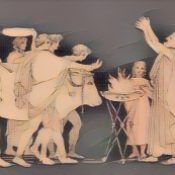
The customs and spiritual practices of the early, pre-Christian Pagan cultures were passed down from one generation to the next. These old ways were traditions for respecting and interacting with the gods and other spirit denizens, and they varied from one culture to another. The Anglo-Saxons, for example, gave due offerings before a wéoh, which was an image or symbol of the honored deity. The ear...

What is Paganism?
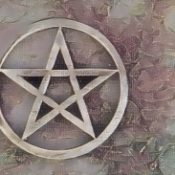
Sometimes that is difficult to define. Modern Paganism probably embraces the most diverse sets of spiritual belief systems and practices in existence today. Paganism is not a traditional “religion” because it does not have any official doctrine. It does, however, have some common characteristics spanning a great variety of traditions. One of the common beliefs is the Divine Presence in nature and ...


Witchcraft Explained
Witchcraft is a number of belief systems whose roots pre date Christianity and which comes under the umbrella heading of Pagan. Witchcraft also has roots which go back to Paleolithic times as illustrated by the cave paintings of our ancient ancestors. The craft of witchcraft can possibly be termed as a living religion and has as much relevance to us today as it did to its practitioners in the past...

The Meaning of the Word Paganism
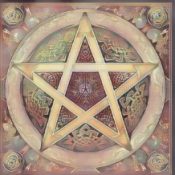
The word Pagan comes from the Latin word “Paganus” which in itself means country dweller. This word may of once been used as a derogatory term created by city dwellers to describe what can be terms as , “Those Hicks Out There”, much like the word redneck. Because the word “Pagan” tended to have a negative meaning it was later adopted as an insult in a bid for control. During the crusades the Chris...