
Author: A Solitary Pagan
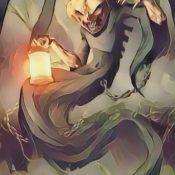

Jack-o’-Lantern
A phosphorescent light seen in marsh and swamp areas, which in folklore is either the manifestation of a malicious lost soul or a death omen. Jacko’-lantern is known by various names, including will-o’-the-wisp and corpse light (England); fairy light, and fox fire (Ireland). According to most legends, the jack-o’-lantern is a wandering soul who has been denied entry into both heaven and hell. Clot...

Folklore & Spell Work
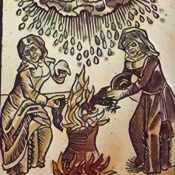
The majority of people who are new to spell working will acknowledge that for them common sense backed up by practical action is normally more productive than theoretical or mystical thinking. In magical working, as in everyday life, when we have to handle a wide range of circumstances, common sense in dealing with them will normally produce the best results. However, when we are confronted with t...

Broom Folklore in Rural Cultures
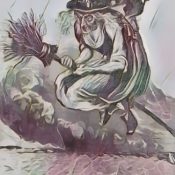
The broom is one of those tools that most people have in their home – whether they’re a witch or not! In many rural cultures, the broom has become a source of legend and folklore. Here are just a few of the many beliefs people have about brooms and sweeping. James Kambos says in Llewellyn’s 2011 Magical Almanac, “When misfortune was thought to have entered a home, one old German custom was to swee...

Baba Yaga
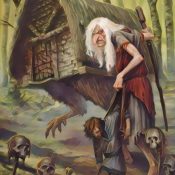
In Russian folklore, a female witch who loved to roast and eat people, preferably children. She was as likely to pop a niece in the oven as she was a stranger. She lived in a little hut beyond a river of fire in the “thrice tenth kingdom.” The hut was ringed with stakes topped by human heads. It stood on chickens’ legs and dogs’ heels and turned on command. Those who were brave enough to enter the...

Merlin
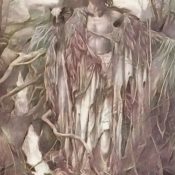
Merlin was as Archetypal wizard of Arthurian lore. Merlin is a Latinized version of the Welsh Myrddin. His exact origins are lost in myth; he may have been a god, perhaps a version of Mabon or Maponos, the British Apollo, the divine ruler or guardian of Britain. The name Merlin may have been given to a succession of wizards. There is no concrete evidence, but it is likely that a Merlin, who was a ...

Berkeley Witch
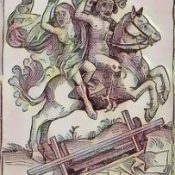
In English folklore, the Berkeley Witch was a wealthy woman who lived during the time of the Norman Conquest in the town of Berkeley in England’s heartland. She was wealthy and well liked, and lived luxuriously. Her secret, kept until she was close to death, was that her wealth was given her by the Devil, in a pact for her soul. Apparently, she earned the name witch because she sold her soul to t...

Lunar Folklore
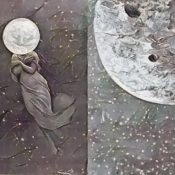
If the Moon is feminine in nature, how did we ever come up with the “man in the Moon?” Even though this idea is often thought of as strictly an American invention, such is not the case. The Sanskrit word for moon is “mas,” which gives it a masculine form, and etymologists have long debated over whether the same is true of the earliest Teutonic languages. Be that as it may, the concept of the Moon’...

Befana
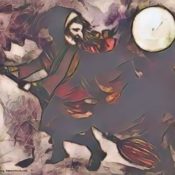
Befana is an old woman who delivers gifts to children throughout Italy on Epiphany Eve (the night of January 5). A popular belief is that her name derives from the Feast of Epiphany or in Italian La Festa dell’Epifania. . In popular folklore, Befana visits all the children of Italy on the eve of the Feast of the Epiphany to fill their shoes with candy and presents if they are good. Or a lump of co...
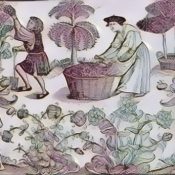

Folk Magick And Ritual Magick
Whether you are casting a simple spell, using items from your kitchen cupboard, or performing a complicated group ceremony, the source of the power behind it is the same. Every spell or ritual involves channelling the life force that runs through all forms of existence and transforming it into higher spiritual energies. These spiritual powers include our own evolved self, which some say is formed ...
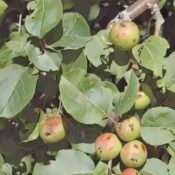

Apples in Folklore
Apples, cultivated in Britain as early as 3000 b.c.e., have had a long association with magic, witches, and goddesses. Magic apple lands, whose fruit gave eternal life, were cultivated by various Western pagan goddesses, among them the Greek Hera, the Scandinavian Idun (Idhunn), the Teutonic Freya and the Norse Hel, Queen of the Underworld. In Iroquois myth, the apple is the central tree of heaven...
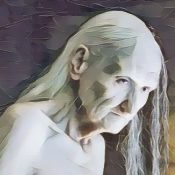

Hag
A Hag is an old, ugly woman believed to be a witch or sorceress; also, a supernatural, demonic being whose powers enable her to live an incredibly long time. The origin of the term “hag” is found in the ancient Goddess beliefs and myths of the Egyptians, Greeks, Celts and pagan Europeans. The Egyptian was a matriarchal ruler in predynastic times, one who commanded the names of power. Many Celtic m...
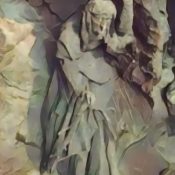

Mother Shipton
A 15th-century English witch and seer who supposedly prophesied scientific inventions, new technology, wars and politics through several centuries, all written in crude rhymes. The books of her “prophecies” are likely the invention of later writers, among them Richard Head, who published a book of her predictions in 1667; an anonymous writer who published the Strange and Wonderful History of Mothe...