
Author: A Solitary Pagan


Spirits
Doubt concerning the existence of spirits arises from ignorance of their real nature. People usually imagine spirits to be something apart from the rest of creation, and the reality of whose existence has not been proved. Many think of them as imaginary beings, known to them only through the fantastic tales of their childhood, and regard their authenticity much as they would that of the personages...


Birch Message of Love
Birch bark has long been respected in pagan and witchcraft traditions. In places like North America and Russia, it served as a natural form of paper, valued for its strength and its connection to the birch tree’s spirit. In magickal practices, birch is often linked to new beginnings, purification, and protection. For these reasons, it is commonly used in spells and rituals. To use birch bark in a ...


Tips for successful romantic magick
In witchcraft, the timing of your spellwork is considered important, much like the ingredients or intentions you use. For example, love spells are often performed on Fridays. This day is linked to Venus, the planet and goddess associated with love, beauty, and attraction. When a Friday also falls on a New Moon, it is thought to be an especially powerful time for starting new relationships or setti...
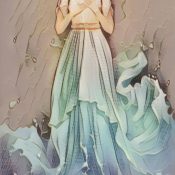

BELTANE LOVE SPELL
Burn copal on a charcoal as an offering to Aphrodite and ask for her assistance: “Stately Aphrodite, born from the gentle foam of the sea She who encompasses divine beauty and inspires love in the hearts of men Mother to the god of love, who embodies feminine perfection, Hear the desire of your faithful devotee. I call for your aid in revealing the love between myself and (NAME) That our bond may ...


Charge of the Goddess
One of the aspects of Witches that sets it apart from most other spiritual practices is beautifully illustrated in a single line of the oracle commonly known as “The Charge of the Goddess,” wherein the goddess states, “All acts of love and pleasure are mine.” When many other commonly accepted spiritual paths place so much emphasis on asceticism and sacrifice, it can be a challenge to fully e...
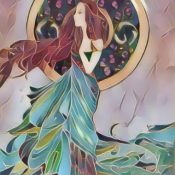

Bru nà Boinne
In addition to their agricultural significance, cattle also had a divinatory role at Beltane. The appearance of a white heifer was considered very auspicious, a manifestation of Bóand, goddess of inspiration and abundance who is credited with establishing the fertile Bru nà Boinne, the Boyne River Valley in County Meath, Ireland. Her presence signified an assurance of human health as well as the g...
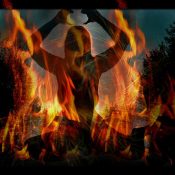

Winter to Summer
Winter’s chains are broken for good as the wheel of the year turns from winter to summer. Love is in the air as bee carries pollen from blossom to aromatic blossom and honey drips from the comb. The sacred union of the goddess and the god is observed, and sexuality is celebrated as we regard our bodies as mirrors of the divine plan. The blazing flames of the great bonfire mirror the passion within...
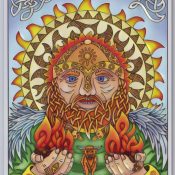

Belinus
The old Celtic name for May Day is Beltane (in its most popular Anglicized form), which is derived from the Irish Gaelic ‘Bealtaine’ or the Scottish Gaelic ‘Bealtuinn’, meaning ‘Bel-fire’, the fire of the Celtic god of light (Bel, Beli or Belinus). He, in turn, may be traced to the Middle Eastern god Baal.

Maia
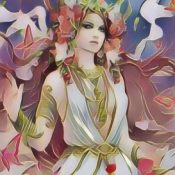
May Day ushers in the fifth month of the modern calendar year, the month of May. This month is named in honor of the goddess Maia, originally a Greek mountain nymph, later identified as the most beautiful of the Seven Sisters, the Pleiades. By Zeus, she is also the mother of Hermes, god of magic. Maia’s parents were Atlas and Pleione, a sea nymph. .

DXUI
DXUI (Bushman; to the Hottentots, TSUI; to the Xhosa and Ponda, THIXO) A creator god. In the beginning, Dxui took the form of a different flower or plant every day, becoming himself at night, until he had created all the plants and flowers that exist.


BUKU
BUKU (Various West African peoples) A sky god sometimes worshipped as a goddess. Buku created everything, even the other gods.

ANYIEWO
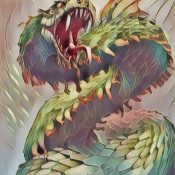
ANYIEWO (Ewe) The Great Serpent who comes out to graze after the rain. The rainbow is his reflection.