
Author: A Solitary Pagan
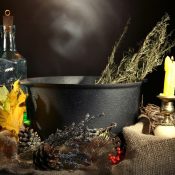

Herbal Amulets
To See Ghosts: Carry lavender and inhale its scent. To allay fears: Carry a mixture of nettle and yarrow. To Detect Witches: Carry a sachet of Rue, maidenhair, agrimony, broom-straw, and ground ivy. To Be Courageous: Wear a fresh borage flower, or carry mullein. To Avoid Military Service: Wear the 4-leaved clover if you wish to avoid duty. To Ensure Safety and Protection on A Journey: Comfrey worn...
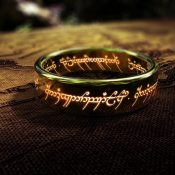

The Magick Ring
One of the most common tools of the craft – far more common and worldwide than the knife, the wand, the cup and the disk – is the magic rings or the rings of power. J. R. R. Tolkien describes them quite accurately in his books, although, of course, in a way more dramatic than reality for the sake of the stories. For example Tolkien says that the ring changes size, which is somewhat true, at least ...

The Witches
I am not silly enough to suppose that everyone, or even a majority among Witches, will agree with everything I will be saying here. However, I have been thinking about this question for quite a while, and I think that some systematic consideration of the issues involved can provide some clarity. The vast majority of Pagans in America are those who call themselves Witches. But what exactly does “Wi...

How to Learn Witchcraft
The most important tool in Witchcraft is not the athame or the wand, it’s not the cauldron or the herbs, it’s not even the book or the spell—the most important tool in Witchcraft is the mind. There are many definitions of Witchcraft, but the one I like most is that it’s a spiritual art rooted firmly in psychology and nature. It involves psychology, because it requires you to have control over the ...
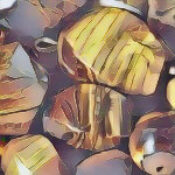

Tiger Eye
Tiger Eye is recognized as a stone that supports harmony and balance. It is often used to help release fear and anxiety, and to encourage decisive action. Many people use Tiger Eye for insight, as it is believed to promote clear thinking and good judgment, unclouded by emotions. Some traditions also associate Tiger Eye with good luck and protection from negative influences. Historically, Tiger Eye...
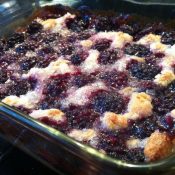

Blackberry Cobbler
2 1/2 C Fresh blackberries, washed1 C Sugar1 C Flour2 t Baking powder1/2 t Salt1 C Milk1 Stick of butter, meltedStir together just the berries and sugar in a large bowl and let it sit out for 25-30 minutes. This will bring out the juices of the blackberries so that they can be sweetened up by the sugar.After about 20 minutes, you should turn on the oven to about 375º and start preparing your batte...


The Pendle Witches
On August 20th 1612 ten people convicted of witchcraft at the Summer Assize held in Lancaster Castle went to the gallows on the moors above the town. Among their number were two men and a woman in her eighties. Their crimes included laming, causing madness and what was termed “simple” witchcraft. In addition to this some sixteen unexplained deaths, many stretching back decades, were laid at their ...

Silver Colour Magick
Silver is a color often associated with illumination and reflection. It is traditionally linked to feminine energy and the moon, symbolizing cycles, mystery, and emotion. Many believe that silver can enhance communication, intuition, and psychic abilities. It is also thought to encourage patience, perseverance, compassion, and a balanced perspective. Silver is sometimes used as a guide for self-re...
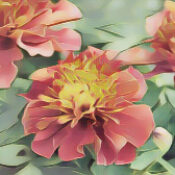

MARIGOLD.
Marigolds are herbaceous plants, some perennial, some annual, of the Asteraceae family, the blooms made up of many tiny florets. They are native to North and South America but are popular garden plants throughout the world. Some of the more popular cultivated varieties are Mexican Marigold Tagetes erecta and French Marigold Tagetes patula. History and Folklore The Latin name Tagetes comes from the...
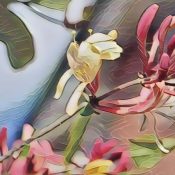

INCENSE/HERB HONEYSUCKLE
General Information Honeysuckles are shrubs or vines with opposite oval-shaped leaves and their signature sweet-smelling tubular flowers. The flowers contain sweet nectar, but the fruit is poisonous. There are more than 100 varieties of Lonicera, about a dozen of which are used medicinally History and Folklore The sturdy stems of honeysuckle have been used to make rope as far back as the Bronze Ag...
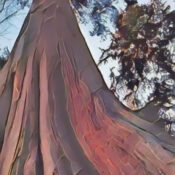

Cedar Wood the Magick of
Cedar Wood Magickal Properties Cedar wood has a long history of use in various cultures, where it is often linked to myth, symbolism, and spiritual practices. In many magical traditions, cedar is associated with the elements of Fire and Earth, representing transformation and grounding. Some sources describe cedar as carrying predominantly male energy, which is thought to contribute qualities such ...
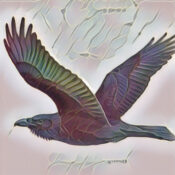

Ravens & Crows in Mythology
Ravens and crows have played important roles in the myths, folklore, and spiritual beliefs of many cultures throughout history. Their intelligence, adaptability, and striking appearance have led people to view them with both admiration and caution. In Celtic mythology, the warrior goddess Morrighan is often linked to crows and ravens. She sometimes appears as one of these birds, or is seen with a ...