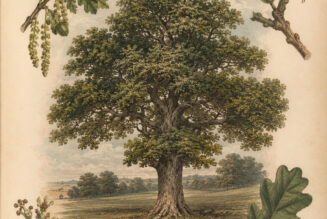
The fir tree is a tall evergreen conifer that has long been admired for its strength, beauty, and ability to remain green throughout the cold winter months. Found across Europe, Asia, and North America, fir trees are known for their straight trunks, soft, flat needles, and upright cones. Because they stay vibrant when many other trees lose their leaves, firs have become powerful symbols of endurance, hope, and everlasting life.
In many pagan traditions, the fir is associated with the cycle of the seasons and the promise that life continues even in the darkest times. During the winter solstice, evergreen branches were brought into homes as reminders that spring would return and that nature’s life force never truly disappeared. This practice eventually influenced many modern winter celebrations. The fir is often linked to protection, resilience, renewal, and spiritual strength.
In witchcraft, fir is valued for its cleansing and protective energies. Its branches, needles, resin, and wood are all believed to carry magical properties. Fir boughs may be placed around the home or above doorways to guard against negative influences and unwanted energy. The fresh scent of fir is also thought to purify a space, making it a popular ingredient in incense, herbal sachets, and ritual oils used before spellwork or meditation.
The fir tree is especially connected with the element of Earth because of its grounding nature, although its towering height also symbolizes a bridge between the physical world and the spiritual realm. Many practitioners meditate beneath fir trees to seek clarity, wisdom, and inner peace. Walking through fir forests is often seen as a way to reconnect with nature and restore emotional balance.
Magically, fir is commonly used in spells for healing, prosperity, courage, longevity, and protection. Small pieces of fir wood can be carried as protective charms, while its resin may be burned to cleanse ritual spaces. Whether appreciated for its natural beauty or its rich spiritual symbolism, the fir remains one of the most respected sacred trees in paganism and modern witchcraft, representing endurance, hope, protection, and the enduring power of nature throughout every season.