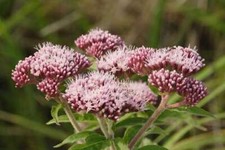
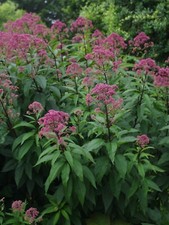
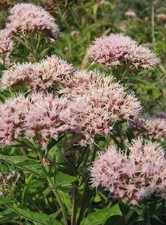
Eupatorium is a group of flowering plants belonging to the daisy family (Asteraceae). Common species include boneset (Eupatorium perfoliatum) and hemp agrimony (Eupatorium cannabinum). These hardy perennials are known for their clusters of small white, pink, or purple flowers, which bloom from late summer into autumn and attract bees, butterflies, and other pollinators. Traditionally, some species of Eupatorium were used in herbal medicine, particularly boneset, which was valued by Indigenous peoples of North America and later by European settlers for treating fevers and colds. While these historical uses are well documented, modern use should be approached with caution, as some species contain compounds that may be harmful if consumed.
In pagan traditions, Eupatorium is often associated with protection, purification, healing, and endurance. Its ability to thrive in challenging conditions has made it a symbol of resilience and renewal. Many modern Pagans view the plant as representing the balance between physical and spiritual well-being, making it a meaningful addition to seasonal celebrations and nature-based rituals. Its late-season blooms also connect it with the harvest and the transition from summer into autumn, reflecting cycles of life, death, and rebirth that are central to many earth-based spiritual paths.
In contemporary witchcraft and folk magic, Eupatorium is commonly included in spells and rituals intended to promote healing, ward off negative influences, and strengthen personal resolve. Dried flowers or leaves may be placed in protective sachets, added to ritual incense blends, or displayed on altars dedicated to healing or ancestral work. Some practitioners also use the plant during cleansing rituals, believing it helps clear unwanted energies and restore spiritual balance.
Like many magical herbs, the symbolism of Eupatorium varies among traditions and individual practitioners. Its magical associations come from folklore, personal belief, and modern spiritual practice rather than scientific evidence. For many who follow pagan or witchcraft traditions, Eupatorium serves as a reminder of nature’s healing power, resilience, and the importance of maintaining harmony between the physical world and the spiritual realm. Whether admired for its ecological value or its symbolic meaning, Eupatorium continues to hold a respected place in both the natural landscape and modern magical practice.