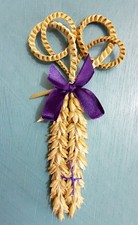
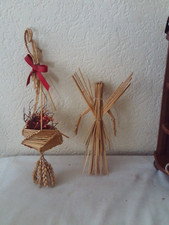
A witch’s corn dolly is a traditional handcrafted figure woven from dried stalks of grain, such as wheat, barley, or rye. Rooted in ancient agricultural customs, corn dollies have long been associated with fertility, prosperity, protection, and the cyclical nature of life. Despite the name, the word “corn” originally referred to any local grain rather than maize.
In many pre-Christian European cultures, it was believed that the spirit of the harvest resided within the grain fields. As the crops were gathered, the final sheaf was often woven into a decorative figure known as a corn dolly. This symbolic vessel was thought to house the essence of the land’s fertility through the winter months, ensuring that the spirit would return to bless the next growing season.
Within modern Paganism and Witchcraft, corn dollies continue to hold deep spiritual significance. They are often crafted and displayed during harvest festivals such as Lammas (Lughnasadh) and Mabon, celebrations that honour the abundance of the earth and the changing seasons. Creating a corn dolly can be a meditative and magical act, allowing practitioners to connect with the energies of nature, gratitude, and renewal.
Many witches use corn dollies as protective charms for the home, placing them on altars, hanging them near doorways, or incorporating them into seasonal decorations. Some are dedicated to specific deities associated with agriculture, fertility, or the harvest, while others serve as symbols of the Goddess, Mother Earth, or the spirit of the land itself.
Corn dollies may also be used in spellwork focused on abundance, growth, prosperity, and personal transformation. Because they are made from natural materials and represent the cycle of sowing, growth, harvest, death, and rebirth, they embody one of the central themes of Pagan spirituality—the interconnectedness of all life.
Today, the witch’s corn dolly remains a powerful symbol of respect for nature, the wisdom of ancestral traditions, and the enduring relationship between humanity and the earth’s seasonal rhythms.