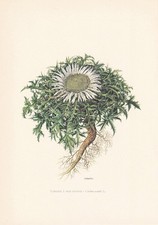
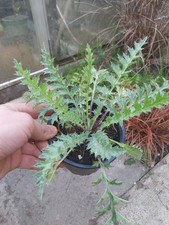
The Carline Thistle (Carlina vulgaris and related species) is a striking wild plant known for its spiny leaves and golden, star-like flower heads. Found throughout much of Europe, it has long been valued not only for its medicinal properties but also for its place in folklore, pagan traditions, and magical practice.
In pre-Christian Europe, the Carline Thistle was regarded as a powerful protective plant. Its fierce appearance, covered in sharp spines, symbolized defense and resilience. People often hung dried flower heads above doorways, windows, and stable entrances to ward off evil spirits, malevolent magic, and misfortune. This protective use continued into the Middle Ages and remains popular among modern practitioners of folk magic.
Within contemporary Paganism and Witchcraft, Carline Thistle is associated with protection, banishing, and boundary-setting. Witches may place the dried flowers on altars dedicated to protective deities or use them in charms designed to shield a home from unwanted energies. The plant’s natural ability to thrive in poor soil and harsh conditions also makes it a symbol of endurance, personal strength, and survival through adversity.
The flower possesses another intriguing characteristic: it often opens in dry weather and closes when humidity rises. Because of this, it became known as a natural weather forecaster and was sometimes linked to divination and the reading of natural signs. For many pagans, this connection reinforces the belief that plants can serve as teachers, helping humans attune themselves to the rhythms of nature.
Elementally, Carline Thistle is commonly associated with Fire due to its defensive qualities and energetic protective nature. Some practitioners also connect it with the Sun, as its golden flower resembles a radiant solar disk. In seasonal celebrations, especially those honouring the height of summer, it may be used to represent the strength and vitality of the sun’s power.
Today, Carline Thistle remains a respected plant ally among pagans and witches. Whether used in protective charms, seasonal rituals, or simply appreciated as a symbol of resilience, it continues a long tradition of magical and spiritual significance rooted in Europe’s ancient folk beliefs.