For many people, symbols are more than decoration. They become reminders of identity, belief, protection, and connection to something larger than everyday life. Among pagans, witches, and practitioners of modern spiritual traditions such as Wicca, one of the most recognized symbols is the pentacle. While many people wear pentacles as jewelry, others choose to keep them as non-jewelry ornaments in their homes, on altars, in gardens, or near places of personal importance. This practice reflects both spiritual meaning and practical use.
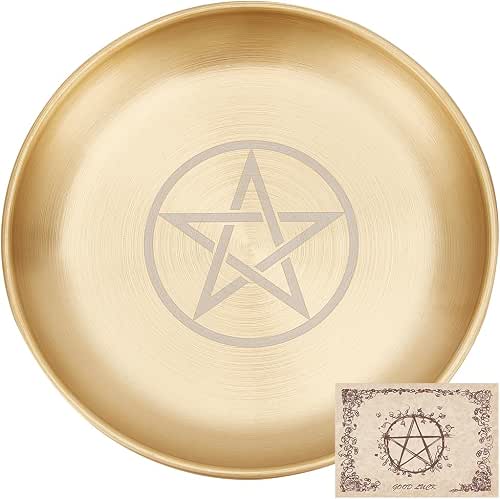
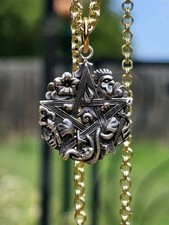
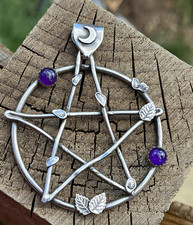
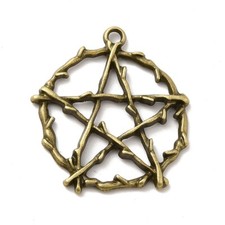
The pentacle is traditionally a five-pointed star enclosed within a circle. In many pagan and witchcraft traditions, the five points represent the classical elements: earth, air, fire, water, and spirit. The circle surrounding the star symbolizes unity, protection, eternity, and the interconnectedness of life. Because of this layered symbolism, the pentacle is often viewed as a sacred emblem rather than merely an accessory.
One reason people keep pentacles as ornaments is for spiritual protection. Across many forms of folk magic and modern pagan practice, symbols are believed to carry energy or intention. A pentacle displayed above a doorway, on a wall, or near an altar may be used as a protective charm meant to guard a space from harmful influences. Similar protective symbolism exists in many religions and cultures; for example, crosses, hamsas, or dreamcatchers are often displayed in homes for spiritual reassurance. For witches and pagans, the pentacle fills a similar role.
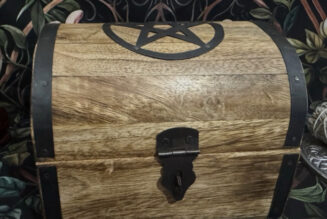
Another important reason is the creation of sacred space. Many practitioners build personal altars where they meditate, pray, perform rituals, or reflect quietly. A pentacle ornament often serves as a focal point for these activities. Rather than being worn outwardly, the symbol becomes part of the environment where spiritual work takes place. Wooden pentacles, engraved stone plaques, candles marked with pentacles, and wall hangings are especially common because they contribute to the atmosphere of ritual and contemplation.
Some people also prefer non-jewelry pentacles because they allow for privacy. Despite growing acceptance of alternative spiritual paths, paganism and witchcraft are still misunderstood in some communities. Wearing a pentacle necklace publicly may invite unwanted attention, questions, or prejudice. Keeping the symbol as a home ornament provides a quieter and more personal expression of belief. It allows practitioners to maintain a connection to their spirituality without making a public statement every day.
The pentacle is also valued for its connection to nature and balance. Many pagan traditions emphasize harmony with the natural world, seasonal cycles, and the elements. Pentacle ornaments are often crafted from natural materials such as wood, clay, iron, or crystal, reinforcing this bond with the earth. A pentacle displayed in a garden or near plants may symbolize respect for the cycles of growth, life, death, and renewal. For many practitioners, the ornament acts as a reminder to stay grounded and mindful of nature’s rhythms.
In addition to spiritual meaning, pentacle ornaments often carry emotional and personal significance. Some are handmade by the practitioner or gifted by close friends, coven members, or family. Because witchcraft and paganism frequently emphasize personal intention, creating or choosing a pentacle can itself become a meaningful act. A handcrafted pentacle may represent a person’s spiritual journey, dedication to a path, or memories of important rituals and life experiences. In this sense, the ornament becomes similar to a cherished heirloom or devotional object.
There is also an aesthetic dimension to the pentacle’s popularity. Many people appreciate its geometric symmetry and historical appearance. Pentacles are found in countless artistic styles, from rustic and medieval-inspired designs to minimalist modern interpretations. Even individuals who are not religious may keep pentacle ornaments because they admire the symbolism of unity, balance, and the five elements. In some cases, the symbol is appreciated as part of a broader fascination with mythology, folklore, or occult history.
Importantly, most modern pagans and witches do not associate the pentacle with evil. Popular culture has often confused the pentacle with sinister imagery, especially through horror films and sensationalized depictions of witchcraft. In reality, the upright pentacle is commonly understood by practitioners as a positive symbol of protection, wisdom, and spiritual balance. Keeping it as a household ornament is therefore not intended as something threatening, but rather comforting and meaningful.
Ultimately, people keep pentacles as non-jewelry ornaments because the symbol functions on many levels at once. It can be protective, spiritual, artistic, personal, and grounding. For pagans and witches especially, the pentacle often represents a connection between the self, nature, and the unseen dimensions of existence. Whether displayed on an altar, carved into wood, hung on a wall, or placed quietly in a sacred corner of the home, the pentacle serves as a visible reminder of belief, intention, and identity.