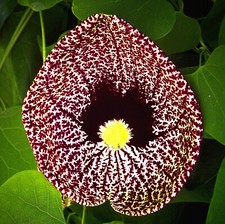
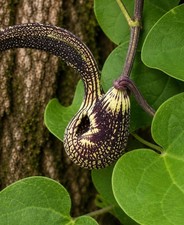
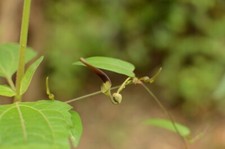
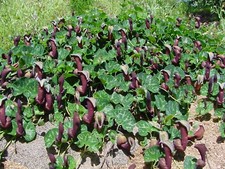
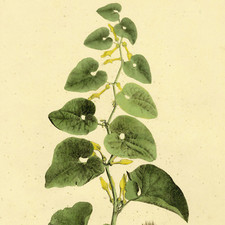
Dutchman’s Pipe (Aristolochia macrophylla) is a striking climbing vine known for its large, heart-shaped leaves and unusual pipe-shaped flowers, which resemble the curved smoking pipes once popular in Europe. Native to eastern North America, it is often grown to cover fences, trellises, and garden arches, creating dense shade during the warmer months. The plant is also valued for attracting the beautiful Pipevine Swallowtail butterfly, whose caterpillars feed exclusively on its leaves.
Although Dutchman’s Pipe has a long history in traditional herbal medicine, modern science has shown that it contains aristolochic acids, compounds that are highly toxic and can cause severe kidney damage and increase the risk of certain cancers. Because of these dangers, the plant should never be used internally or for medicinal purposes without expert guidance, and many countries have banned its use in herbal remedies.
Within pagan traditions and modern witchcraft, Dutchman’s Pipe is appreciated more for its symbolism than for any physical use. Its twisting vines represent life’s winding journey, personal transformation, and the hidden paths of spiritual growth. The unusual flowers are often associated with gateways, mystery, and the transition between the physical and spiritual worlds, making the plant a fitting symbol for rituals focused on change, initiation, or exploring the unseen.
Some practitioners place images or representations of the vine on altars dedicated to nature spirits or seasonal celebrations, believing its unique appearance encourages intuition and reflection. Others associate it with the element of Earth because of its vigorous growth and deep connection to woodland habitats. Rather than harvesting the plant, many modern witches simply observe it in gardens or forests, respecting its beauty while acknowledging its toxicity.
As with many plants used in folklore, there is little historical evidence that Dutchman’s Pipe held a widespread or central role in ancient pagan religions. Most magical associations are part of modern nature-based spiritual practices, where symbolism and personal meaning are valued over historical tradition.
Dutchman’s Pipe reminds us that nature often combines beauty with danger. Its remarkable appearance, ecological importance, and symbolic connection to mystery and transformation have earned it a unique place in contemporary pagan and witchcraft traditions, where it is admired with respect rather than handled carelessly.