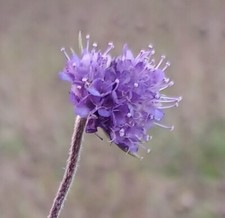
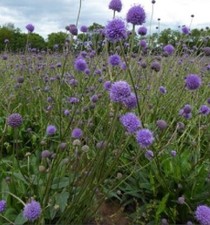
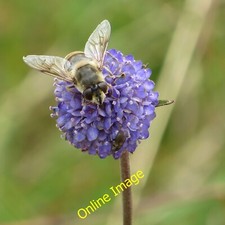
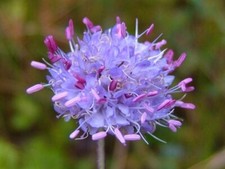
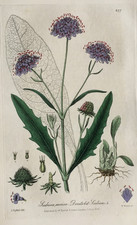
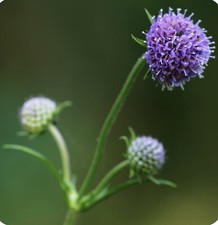
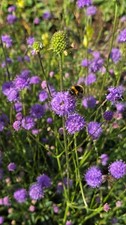
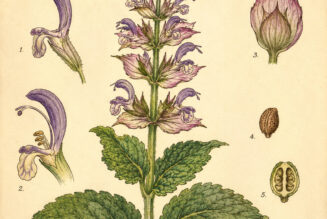
Devil’s-bit scabious (Succisa pratensis) is a beautiful wildflower found in meadows, grasslands, and wetlands across much of Europe, including Britain. It produces rounded, violet-blue flowers that bloom from late summer into autumn, attracting bees, butterflies, and other important pollinators. The plant gets its unusual name from an old legend that says the Devil, angry at the herb’s healing powers, bit off part of its root. As a result, the root appears short and blunt, as though it has been bitten.
For centuries, devil’s-bit scabious was valued in traditional herbal medicine. It was once believed to help treat skin diseases, wounds, coughs, fevers, and infections. Although modern medicine no longer uses it as a common remedy, the plant remains an important part of traditional folklore and the history of herbal healing.
In pagan traditions, devil’s-bit scabious is often associated with protection, healing, and resilience. Because of the legend surrounding its root, the plant came to symbolize the triumph of nature’s goodness over harmful forces. Many folk practitioners believed carrying or growing the herb could ward off evil influences, curses, and negative energy. It was sometimes placed near the home or included in protective charms to create a spiritual barrier against misfortune.
Within modern witchcraft, particularly forms of nature-based spirituality such as Wicca and traditional folk magic, devil’s-bit scabious is used in spells and rituals focused on protection, banishing negativity, healing, and strengthening personal boundaries. Some practitioners add the dried flowers to herbal sachets, incense blends, or ritual jars designed to encourage emotional recovery and spiritual cleansing. Others use it during seasonal celebrations that honour the changing cycles of nature and the balance between life, death, and renewal.
While there is no scientific evidence that the plant possesses magical powers, its rich folklore and striking appearance continue to inspire many people who practice paganism and witchcraft today. Devil’s-bit scabious serves as a reminder of the enduring connection between plants, traditional wisdom, and the symbolic language of nature. Whether admired for its ecological importance, historical medicinal uses, or magical associations, this remarkable wildflower remains one of Britain’s most fascinating plants.