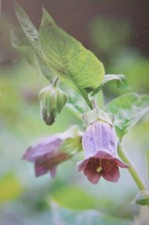
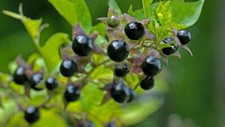
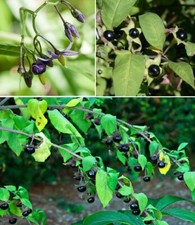
Deadly Nightshade (Atropa belladonna) is one of the world’s most famous poisonous plants. Native to Europe, North Africa, and parts of Western Asia, it is easily recognised by its dark purple, bell-shaped flowers and shiny black berries. Despite its attractive appearance, every part of the plant is highly toxic, containing powerful alkaloids such as atropine, scopolamine, and hyoscyamine. These chemicals can cause blurred vision, hallucinations, paralysis, and, in severe cases, death if consumed.
Throughout history, Deadly Nightshade has inspired both fear and fascination. Its scientific name, Atropa, comes from Atropos, one of the three Fates in Greek mythology who cut the thread of life, reflecting the plant’s deadly reputation. During the Renaissance, women were said to use tiny amounts of its juice to dilate their pupils, creating the fashionable “beautiful eyes” that inspired the name belladonna, meaning “beautiful lady” in Italian.
In pagan traditions, Deadly Nightshade has long been viewed as a plant of mystery, transformation, and the spirit world. Because of its powerful effects on the mind, it became associated with liminal spaces—the boundaries between life and death, the physical and spiritual worlds. Some historical accounts suggest that practitioners of folk magic and herbal traditions believed the plant could aid in visions, spirit journeys, and communication with other realms. However, these beliefs were often mixed with folklore, and there is little reliable evidence that such practices were widespread.
In the folklore surrounding witchcraft, Deadly Nightshade became one of several plants linked to the legendary “flying ointments” said to be used by witches. These stories claimed that ointments made from poisonous herbs could induce vivid dreams or sensations of flight through their hallucinogenic properties. While these tales remain a fascinating part of European folklore, historians believe many accounts were exaggerated or influenced by superstition and fear during the witch trials.
Today, Deadly Nightshade remains a symbol of both danger and mystery. Although its compounds continue to be used in carefully controlled modern medicine, the plant itself should never be handled or consumed without expert knowledge. Its enduring place in pagan lore and witchcraft reflects humanity’s long fascination with plants that blur the line between healing, poison, myth, and magic.