Witchcraft involves a variety of tools and accessories, each with its own purpose and symbolism. Understanding these items can help you feel more comfortable as you begin your journey.
The athame is a double-edged knife, typically about six inches long. While it is not especially sharp, it plays an important role in many rituals. The athame is used to mark the boundaries of the ritual circle, stir salt and water for consecration, and sometimes to carve symbols or words into candles. Many practitioners personalize their athame by marking it with their chosen name and storing it in a white cloth or container. In some rituals, such as the Great Rite, the athame also serves as a symbol of the union between the God and Goddess.
A bell may be used during rituals, though its use is optional. Some choose to ring a bell when opening or closing the circle, invoking deities, or marking transitions between different phases of a ritual.
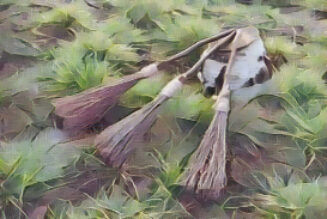
The besom, or broom, is another traditional tool. While witches are not known to fly on brooms, the besom is used to sweep away lingering energies and purify the space before casting a circle.
The boline is a second type of knife, distinct from the athame. It is usually made of copper and kept very sharp, as it is used specifically for cutting herbs.
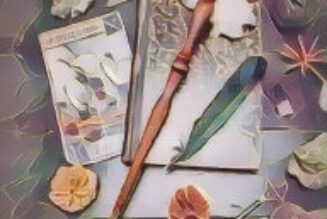
The Book of Shadows serves as a personal or shared guidebook. It contains records of rituals, spells, and important information relevant to the practitioner or coven, including details about the sabbats and other significant events.
Candles are commonly used to represent the four directions within the ritual circle: green for north (earth), red for south (fire), yellow for east (air), and blue for west (water). Additional candles on the altar may be chosen to reflect the specific ritual being performed.
A paton is a plate or disk, often decorated with a pentagram, placed on the altar to hold ritual tools and serve as a focal point during ceremonies.
The pentacle, a five-pointed star within a circle, is a well-known symbol of witchcraft. Each point represents one of the elements—earth, fire, water, air, and spirit—while the circle symbolizes unity and the divine.
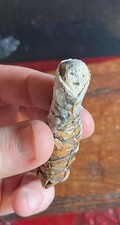
Sage is frequently used to purify the ritual area. When burned, it produces a thick, grayish smoke that is believed to cleanse the space of unwanted energies.
Salt is another purifying agent. It is often kept in a seashell or glass dish and mixed with water to represent the elements of earth and water during the consecration of the circle.
A staff, usually about shoulder height, can be used in a similar way to a wand, serving as a tool for directing energy.
Some practitioners prefer to use a sword instead of an athame to mark the boundaries of the circle.
The thurible, or incense burner, is used to burn incense, which represents the element of air and, when lit, also symbolizes fire. Incense is used to purify both the space and the ritual tools.
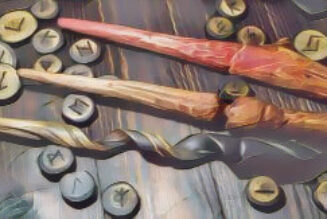
Wands are another common tool, symbolizing fire, power, wisdom, and healing. Like the staff, sword, and athame, a wand can be used to cast the circle or direct energy during spells.
A water container is used during the consecration of the circle. It can be any vessel large enough to hold water and a few pinches of salt, and to allow stirring with the athame. Water, like salt and sage, is valued for its purifying qualities.
By learning about these tools and their uses, you can approach your practice with greater confidence and understanding. Each item holds its own meaning, and over time, you may find which ones resonate most with your personal path.