The Key and its Symbolic Power.
Throughout history, the key has served as a powerful symbol, representing both the ability to open and the authority to lock away. This dual nature lies at the heart of its mystical significance, embodying the threshold between what is known and unknown, what is accessible and what remains hidden.
The image of the key appears in many spiritual traditions. For instance, a dove carrying a key is a potent symbol, representing the spirit’s power to open the gates of heaven and grant access to higher realms of consciousness. The dove, often linked with peace and divine messages, becomes a bridge between the earthly and the sacred when paired with the key.
In Roman mythology, Janus—the god of doors, gates, and new beginnings—is almost always shown holding a doorkeeper’s staff and a key. Janus presides over transitions, both literal and metaphorical. He is the guardian of thresholds, the opener of new opportunities, and the protector of passages. The key in his hand is not merely a tool, but a symbol of his authority over change and transformation.
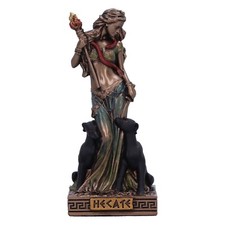
The goddess Hecate, honored in Greek mythology, is another significant figure associated with keys. As the keeper of the key to the underworld, Hecate holds the power to unlock mysteries and secrets beyond mortal understanding. Her key is the gateway to the afterlife, to hidden knowledge, and to the transformative power of the unknown. In many traditions, Hecate’s key is invoked in rituals seeking wisdom, protection, and guidance at life’s crossroads.
In symbolic language, a key often marks the moment of initiation—the beginning of a journey into deeper knowledge or spiritual awakening. To possess a key is to be entrusted with access to mysteries unavailable to most, and to stand on the threshold of discovery.
The material and color of a key also hold deep meaning. A silver key is said to represent psychological understanding and insight into the mind. A gold key symbolizes philosophical wisdom, enlightenment, and the pursuit of truth. The rare diamond key is believed to grant the power to act decisively, manifest intentions, and unlock the highest levels of potential.
Finding a key in dreams or rituals is often interpreted as a sign that you are nearing a significant discovery or breakthrough. The treasure that the key unlocks is rarely found without overcoming challenges, symbolizing the importance of perseverance and the rewards of inner work.
There is a profound connection between the key and the Egyptian ankh, the ancient symbol of eternal life. The ankh, with its looped top, resembles a key and is often depicted in the hands of Egyptian gods and goddesses. In funerary art and temple carvings, deities are shown holding the ankh as if it were a key, especially during ceremonies concerning the dead and the afterlife.
The ankh as a key emphasizes the idea of unlocking the mysteries of existence, granting access to immortality, and bridging the worlds of the living and the dead. It stands as a symbol of life’s continuity and the soul’s journey beyond physical death.
As an archetypal symbol, the key ultimately represents knowledge, wisdom, and the ability to open the gates of death to immortality. It reminds us that with courage, insight, and perseverance, we can unlock the doors to our own transformation and step into the mysteries that await.