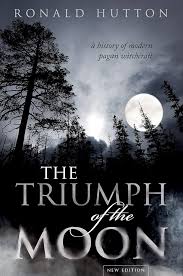
Ronald Hutton’s The Triumph of the Moon is widely regarded as one of the most important and authoritative books ever written on the history of modern pagan witchcraft. Deeply researched and carefully documented, the book offers readers a detailed exploration of how modern witchcraft emerged, evolved, and eventually became a global spiritual movement. Rather than relying on myths or sensational portrayals, Hutton approaches the subject as a serious historian, presenting a balanced and scholarly account that is both informative and engaging.
At the heart of the book is Hutton’s examination of the origins of modern witchcraft, particularly in twentieth-century England. He demonstrates that modern pagan witchcraft—often associated with traditions such as Wicca—did not simply survive unchanged from ancient times, as many early practitioners believed. Instead, it developed through a rich combination of influences that included folklore, ceremonial magic, romantic literature, occult societies, ancient pagan imagery, and nineteenth-century interest in pre-Christian spirituality. Hutton carefully pieces together these influences to show how modern witchcraft was shaped by both historical traditions and the cultural climate of the modern era.
One of the book’s greatest strengths is its ability to challenge long-standing misconceptions about witchcraft. For centuries, witchcraft in Western society was associated with fear, persecution, superstition, and accusations of evil practices. Popular imagination often linked witches with dark magic, secret rituals, and the witch trials of medieval and early modern Europe. Hutton explains how modern pagan witchcraft transformed these negative images into symbols of spiritual empowerment and cultural renewal. He shows that contemporary witchcraft emphasizes harmony with nature, reverence for seasonal cycles, personal spiritual growth, creativity, and the celebration of both feminine and masculine divine energies.
Hutton also explores the symbolic and ritualistic dimensions of modern witchcraft. Rituals often revolve around lunar phases, the changing seasons, and ancient festivals connected to the natural world. These practices reflect a worldview that values the sacredness of nature and humanity’s connection to the earth and cosmos. Through this discussion, the book reveals why modern witchcraft appeals to many people seeking a spiritual path that feels more personal, experiential, and environmentally conscious than conventional religious structures.
An especially fascinating aspect of The Triumph of the Moon is Hutton’s discussion of the cultural and literary figures who helped reshape public attitudes toward paganism and magic. Writers and intellectuals such as W. B. Yeats, D. H. Lawrence, and Robert Graves played a significant role in romanticizing ancient myths, folklore, and the sacred feminine. Their works encouraged readers to view pagan traditions not as relics of superstition, but as meaningful sources of imagination, spirituality, and artistic inspiration. Hutton demonstrates how literature, poetry, and mythology helped prepare the cultural ground for the rise of modern pagan movements in the twentieth century.
The book devotes considerable attention to the key personalities who shaped modern witchcraft into an organized religious movement. Among the most important is Gerald Gardner, often considered the founding figure of modern pagan witchcraft. Hutton provides a detailed and nuanced account of Gardner’s life, beliefs, and activities, including his claim of initiation into a surviving coven of witches in England during the mid-twentieth century. Gardner’s writings and public advocacy brought witchcraft into public awareness and helped establish many of the rituals, structures, and teachings associated with modern Wicca.
Hutton also highlights the contributions of other influential figures, such as Doreen Valiente and Alex Sanders. Valiente refined and expanded many early Wiccan rituals and texts, giving the movement greater depth and poetic richness. Sanders, meanwhile, introduced new interpretations and ceremonial elements that contributed to the diversification of modern witchcraft traditions. Through these biographies, Hutton illustrates how modern paganism evolved through collaboration, disagreement, creativity, and continual reinterpretation.
Beyond its historical narrative, The Triumph of the Moon places modern witchcraft within larger social and cultural developments. Hutton examines how the movement intersected with feminism, environmentalism, countercultural movements, and the growing search for alternative spiritual paths in the modern world. He discusses how many practitioners embraced witchcraft as a means of reclaiming feminine spirituality, rejecting rigid religious hierarchies, and reconnecting with nature in an increasingly industrialized society.
At the same time, Hutton does not avoid controversy. He addresses debates concerning historical authenticity, claims of ancient lineage, and the use or reinterpretation of symbols drawn from older cultures and religions. His willingness to critically evaluate both historical evidence and popular assumptions gives the book credibility and intellectual depth. Importantly, however, Hutton writes with respect and empathy toward practitioners, balancing academic rigor with an appreciation for the spiritual meaning these traditions hold for many people.
What makes The Triumph of the Moon particularly remarkable is Hutton’s writing style. Despite the complexity of the subject, he presents his research in a clear, accessible, and engaging manner. Readers do not need prior knowledge of paganism or occult history to appreciate the book. Hutton combines scholarly precision with vivid storytelling, making the work equally valuable to academics, spiritual seekers, and general readers interested in religious history and cultural change.
Ultimately, The Triumph of the Moon is far more than a history of witchcraft. It is a study of how myths, traditions, literature, spirituality, and cultural identity evolve over time. Ronald Hutton reveals modern pagan witchcraft as a dynamic and living tradition—one shaped by history, imagination, and the human desire for meaning and connection. The book remains essential reading for anyone interested in the history of witchcraft, paganism, folklore, or the development of alternative spiritual movements in the modern age.