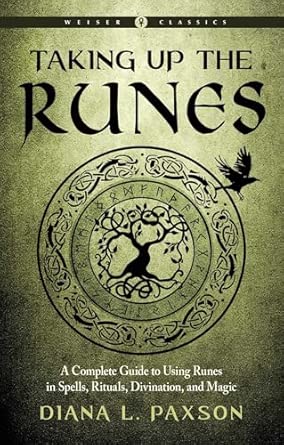
If you want to learn about runes and how to use them in magic, “Taking Up the Runes” by Diana Paxson is a great place to start. This book is easy to understand and full of helpful advice. Diana Paxson has spent many years studying Norse traditions and paganism. She shares both her research and her own experiences, so the book feels friendly and personal. Whether you are new to runes or have some experience, you will find a lot of useful information here.
The book does a good job of explaining both the history of the runes and how you can use them today. Paxson talks about where the runes come from and what they meant in the past. She uses old stories and real artifacts to help you understand. But she also explains how you can use runes in your own life. For example, the rune Fehu used to mean cattle and wealth. Today, you can use it to help bring more abundance into your life. At the end of each chapter, there are simple activities you can try, like meditating with a rune, making your own rune set, or writing about your experiences. These exercises help you connect with the runes in a personal way.
This book covers everything you need to know about runes. Paxson shows you how to make your own rune set from wood, stone, or clay. She explains how to take care of your runes and how to use them for readings. You will learn different ways to cast runes, from picking just one to using more complicated spreads. The book also talks about how to use runes for personal growth, spiritual guidance, and magic. There are ideas for group activities too, like studying runes with friends or doing rituals together. You will also find creative ideas, such as making rune art or writing rune-inspired poems. Whether you practice alone or with others, you will find something helpful in this book.
Sometimes, the book can feel a bit overwhelming because there is so much information. Some chapters are packed with details and instructions. If you are brand new to runes or witchcraft, you might wish there were more pictures or step-by-step guides. If you learn best by seeing things, you might want to look for videos or printable charts to help you. Still, the book’s exercises and clear explanations make it easier to follow. Paxson’s writing is encouraging, so you will feel supported as you learn.
For me, “Taking Up the Runes” is a book I use all the time. I go back to it whenever I want to do a ritual, ask the runes for advice, or just learn more about their meaning. The mix of history, practical tips, and personal stories makes it special. If you want to learn about runic magic—whether you are interested in the history, the spiritual side, or the magic itself—this book is a wonderful guide. It will help you start your journey with runes and give you confidence as you learn.
To really appreciate runes, it helps to know a bit about their origins. Runes are ancient symbols that were used by Germanic peoples, especially in Scandinavia, Germany, and England. The oldest runic inscriptions date back to around 150 CE. Originally, runes were used for writing, but they also held magical and spiritual meanings. Each rune is more than just a letter—it’s a symbol with its own story, energy, and power. For example, the rune Ansuz is linked to Odin, the Norse god of wisdom and communication. When you work with Ansuz, you might focus on improving your own communication or seeking inspiration.
Paxson’s book explains the different runic alphabets, like the Elder Futhark, Younger Futhark, and Anglo-Saxon Futhorc. She describes how each rune has its own sound, name, and meaning. The Elder Futhark, with 24 runes, is the most commonly used for magical work today. Paxson gives you the background for each rune, including its historical uses and how it was seen in myths and legends. She also shares stories from the Poetic Edda and other ancient texts, making the runes come alive.
One of the best things about working with runes is how flexible they are. You can use them for divination, like drawing a single rune for guidance or casting a handful to see what patterns emerge. Paxson offers step-by-step instructions for different rune spreads, from simple one-rune draws to more complex layouts. She also explains how to ask clear questions and interpret the runes’ answers. For example, if you draw the rune Raidho, which is about journeys and movement, you might reflect on where you are headed in life or what changes you need to make.
Runes can also be used in spellwork and rituals. You might carve a rune into a candle, draw it on paper, or even trace it in the air with your finger. Paxson gives lots of ideas for using runes in everyday magic. For instance, you could draw the rune Algiz, which means protection, on your door or carry a small stone with Algiz in your pocket for safety. She encourages you to experiment and find what feels right for you.
If you enjoy crafts, making your own rune set can be a powerful experience. Paxson walks you through the process, whether you want to carve runes into wood, paint them on stones, or mold them from clay. She explains how to consecrate your runes—blessing them with your intention and energy. This makes your rune set unique and personal. You can also create rune art, like painting runes on canvas or making jewelry with your favorite symbols.
Journaling is another important part of rune work. Paxson suggests keeping a rune journal where you record your readings, dreams, and insights. Over time, you’ll notice patterns and deepen your understanding. You might write about how a certain rune shows up in your life, or how your feelings change when you meditate with it. This practice helps you build a personal relationship with the runes.
Group work can be especially rewarding. Paxson includes ideas for rune study circles, group rituals, and creative projects. For example, you might gather with friends to paint runes on stones, share stories about your experiences, or chant rune names together. These activities help you learn from others and feel supported on your journey.
If you’re looking for more ways to connect with runes, try meditating with a single rune each day. Hold the rune in your hand, close your eyes, and focus on its meaning. Notice any thoughts, feelings, or images that come up. You can also create a vision board with runic symbols and affirmations, or write poems inspired by the runes’ energies.
Paxson’s book also addresses common questions and challenges. She talks about what to do if you feel stuck or confused, and how to trust your intuition. She reminds you that everyone’s path is different, and it’s okay to make mistakes or change your approach. The most important thing is to stay curious and open-minded.
As you work with runes, you may notice changes in your life. Many people find that runes help them feel more grounded, confident, and connected to their intuition. You might discover new strengths, heal old wounds, or find guidance during difficult times. Paxson shares her own stories and those of other practitioners, showing how runes can be a source of comfort and inspiration.
Here are a few extra tips for beginners: Start with one rune at a time, and don’t rush. Spend a week or more getting to know each symbol. Try drawing runes from a bag and reflecting on their messages. Use runes in your daily life—draw them in your planner, add them to your altar, or wear them as jewelry. And remember, there’s no right or wrong way to work with runes. Trust your instincts and enjoy the journey.
In summary, “Taking Up the Runes” is more than just a book—it’s a companion for your magical path. It offers history, practical advice, creative ideas, and encouragement every step of the way. Whether you’re drawn to the ancient stories, the hands-on activities, or the spiritual wisdom, you’ll find something to inspire you. If you’re ready to explore the world of runes, this book will help you build a strong foundation and grow your confidence as a practitioner.