We would like to disclose that this website may contain affiliate links. This means that if you click on a product link and make a purchase, we may earn a commission. As an Amazon & eBay Partner Network Associate, we earn from qualifying purchases.
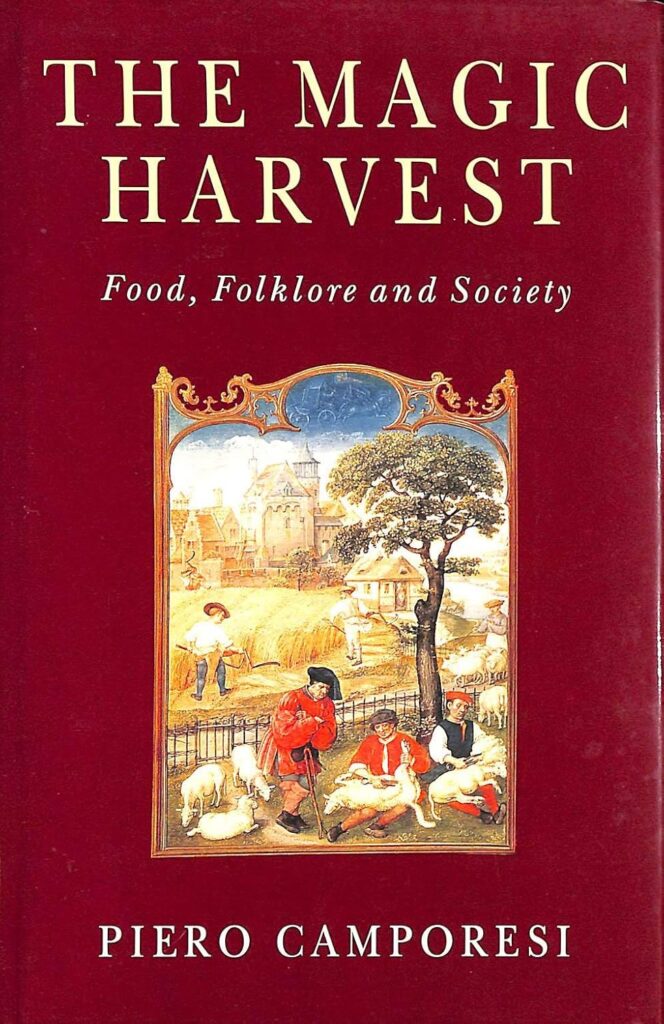
“The Magic Harvest” by Piero Camporesi is an important book about the connections between food, folklore, and spirituality in European, especially Italian, history. Camporesi looks deeply at how food rituals, farming cycles, and community feasts were a central part of life in preindustrial societies. He combines anthropology, history, and cultural symbolism to show that eating was not just about getting nourishment. Instead, it was a way for people to take part in a larger spiritual story that connected everyday life to the mystical.
One of the book’s main strengths is how it brings the past to life through sensory details. Camporesi’s writing describes the sights, smells, and textures of rural life in a vivid way. For example, he explains that baking bread was more than a daily chore. It was a sacred act with magical meaning. Bread symbolized life, death, and rebirth, and it connected to old fertility myths and Christian traditions. Seasonal celebrations, like harvest festivals and solstice feasts, were not just social events. They were special times when people felt closer to the divine and to the cycles of nature.
Camporesi uses a wide range of sources, including medieval manuscripts, folk songs, and oral traditions. He explains the hidden meanings behind common foods. For instance, beans, grains, and salt all had symbolic importance. The amount of certain foods available could even shape people’s beliefs. The book also discusses the magical qualities people believed foods had, the use of charms and spells in cooking, and how food taboos reflected concerns about purity, health, and the supernatural. In one section, Camporesi explores how bread played a role in both pagan and Christian rituals, showing how it changed from a basic food to something with spiritual power.
However, “The Magic Harvest” can be difficult to read at times. Camporesi’s writing style is academic and sometimes includes references to rare historical sources or quotes in other languages. The book sometimes goes off-topic, discussing subjects like alchemy and medicine, which may distract from the main ideas. Some readers might find it hard to follow if they are not already familiar with European folklore or religious history. Still, for those who are interested and willing to take their time, the book offers many valuable insights.
“The Magic Harvest” has had a big impact on cultural history and anthropology. Camporesi’s work has encouraged other scholars to think more about how food shapes group identity, rituals, and beliefs about the world. His analysis of bread, feasts, and seasonal celebrations has helped people understand how everyday actions—like baking, eating together, or celebrating the harvest—can express community values and connect the sacred with the ordinary. The book’s influence goes beyond academic circles and appeals to anyone interested in the hidden stories behind food, rituals, and beliefs.
In summary, “The Magic Harvest” is a challenging but rewarding book. It is a good choice for scholars, students, and curious readers who want to learn about the links between food, folklore, and spirituality. Camporesi’s study encourages us to see the kitchen, the field, and the shared table as places full of meaning and magic. It reminds us that ancient rituals and forgotten beliefs still echo in the way we prepare and share food today.