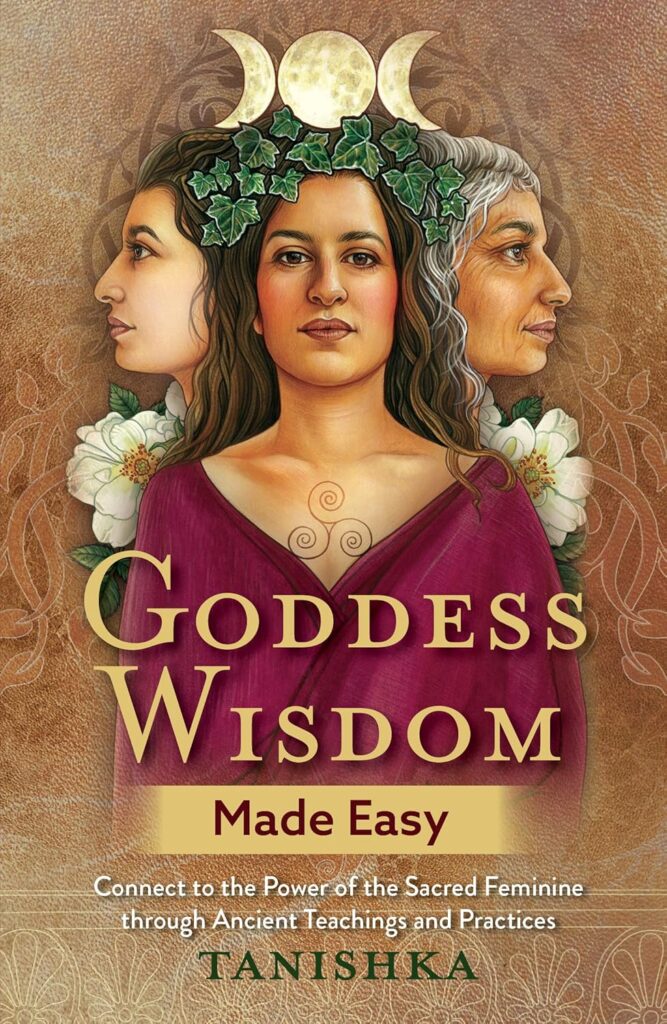
“Goddess Wisdom Made Easy” by Tanishka is a practical introduction to goddess spirituality, witchcraft, and the sacred feminine. The book aims to connect readers with the sacred feminine through ancient teachings, rituals, and everyday practices. It is particularly suitable for those beginning their exploration of witchcraft or goddess traditions, offering an overview of goddess cultures, the value of feminine power, and the wisdom found in natural cycles and intuition. Tanishka’s approach is nurturing and supportive, presenting goddess spirituality as a path of rediscovering the sacred within oneself and the world, rather than following strict rules. Readers are encouraged to honor their experiences, trust their intuition, and recognize the cycles of life as meaningful.
The book’s strength lies in its accessible and clear style. Tanishka simplifies complex histories and philosophies, making them approachable for beginners. She introduces several goddess archetypes—such as the Maiden, Mother, and Crone—and explains their connections to different chakras and life stages. This structure helps readers relate ancient wisdom to modern life. For instance, the Maiden represents new beginnings and creativity, the Mother stands for nurturing and abundance, and the Crone embodies wisdom and transformation. By exploring these archetypes, readers can better understand their own cycles of growth and renewal. The book also includes stories from various goddess traditions, such as Greek, Celtic, Hindu, and Indigenous cultures, illustrating the global celebration of the sacred feminine. This diversity allows readers to identify with archetypes that resonate with their heritage or personal journey.
The book provides a range of rituals, meditations, and exercises to help readers connect with their inner goddess. Tanishka offers practical instructions for creating personal altars, celebrating lunar cycles, and marking seasonal changes. The suggested tools—candles, crystals, and herbs—are simple and accessible, making these practices suitable for different living situations. These activities offer concrete ways to explore spirituality and develop intuition. For example, an altar can be created using meaningful objects, such as a favorite stone or a photo of an ancestor, and can serve as a space for reflection and intention-setting. The book also describes moon rituals, like setting intentions at the new moon and releasing old patterns at the full moon, as well as seasonal celebrations that honor the turning of the year. Meditations and visualizations are included to help quiet the mind and foster a sense of presence. The exercises are adaptable, allowing readers to modify them according to their beliefs and circumstances.
A key theme in the book is alignment with nature’s cycles. Tanishka explains how observing the rhythms of the moon, seasons, and elements can help individuals feel more grounded and connected. She draws on ancient wisdom, combining stories, myths, and practical advice to encourage respect for both the earth and personal cycles. For example, the phases of the moon are presented as reflections of our own periods of activity and rest. Readers are invited to notice changes in their environment and see them as mirrors of their inner experiences. Working with the four elements—earth, air, fire, and water—can bring balance to body, mind, and spirit. The book also highlights self-care practices, such as mindful movement and creative expression, as ways to honor the sacred feminine. Tanishka emphasizes that spirituality can be integrated into daily life, transforming ordinary routines into meaningful acts.
The book’s broad coverage may also present some limitations. While it addresses a wide range of topics, including goddess mythology, chakra healing, and ritual practice, some sections may feel introductory for those seeking detailed historical analysis or advanced techniques. The focus on the feminine may not appeal to everyone, especially those interested in a broader range of witchcraft traditions, including masculine or non-binary perspectives. Readers with prior knowledge of goddess spirituality or those wishing to study specific traditions in depth may find the content basic. However, the book is intended as an entry point, and Tanishka encourages further exploration through study, community, and personal experimentation. The inclusive tone invites adaptation of the teachings to suit individual backgrounds and identities. Tanishka acknowledges the presence of both sacred feminine and masculine energies, encouraging readers to seek balance within themselves and their communities. For those interested in more specialized or scholarly resources, this book can serve as a starting point.
In summary, “Goddess Wisdom Made Easy” is a useful introduction for those interested in goddess spirituality and feminine wisdom. Its practical advice, inclusive approach, and variety of examples make it accessible for beginners. The book offers guidance for creating altars, celebrating seasonal changes, and reconnecting with intuition. Tanishka’s teachings highlight that the journey of witchcraft and goddess spirituality is personal and evolving. Readers are encouraged to explore, experiment, and find what is meaningful for them, whether through community, personal ritual, or time in nature. Ultimately, the book serves as an invitation to rediscover personal and universal magic, and to approach the spiritual path with confidence, curiosity, and respect.