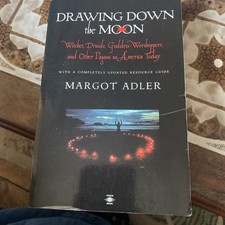
Margot Adler’s Drawing Down the Moon stands as one of the most influential and insightful studies of modern Paganism in the United States. First published in 1979, the book remains a cornerstone for readers seeking a deeper understanding of contemporary Pagan spirituality and the communities that practice it. Written by Adler—an accomplished journalist, National Public Radio correspondent, and practicing Wiccan—the work combines rigorous research with personal engagement, creating a thoughtful and highly accessible exploration of a spiritual movement that was often misunderstood or overlooked by mainstream society.
What makes Drawing Down the Moon particularly remarkable is Adler’s immersive approach to research. Rather than relying solely on academic observation or secondhand accounts, she traveled extensively across the United States, attending rituals, festivals, ceremonies, and gatherings organized by various Pagan groups. Through hundreds of interviews and firsthand experiences, Adler documented the beliefs, practices, and everyday lives of people involved in a broad spectrum of Pagan traditions. These included Wiccans, Druids, Goddess-worshippers, reconstructionist traditions, ceremonial magicians, and solitary practitioners following eclectic spiritual paths. Her willingness to engage directly with these communities allowed her to present a balanced and authentic portrayal that was both empathetic and intellectually objective.
The book carefully traces the historical and cultural roots of modern Paganism, showing how contemporary practitioners draw inspiration from ancient mythologies, pre-Christian religions, folklore, ceremonial magic, and even modern literature such as fantasy and science fiction. Adler explains how many Pagans reinterpret ancient symbols and rituals in ways that feel relevant to contemporary life. Central to these practices is a strong reverence for nature, personal spiritual experience, creativity, and individual freedom. Rather than presenting Paganism as a rigid or unified religion, Adler emphasizes its fluidity and diversity, illustrating how practitioners shape their spiritual paths according to personal beliefs and experiences.
One of the greatest strengths of Drawing Down the Moon is its detailed examination of the diversity within the Pagan movement itself. Adler demonstrates that modern Paganism is not a single organized faith but rather a collection of many traditions, philosophies, and practices. Some groups are highly structured, with formal covens, groves, and established initiation systems, while others are informal circles or solitary individuals practicing independently. Theologically, the movement is equally diverse. Some practitioners embrace polytheism and worship multiple deities, while others view divinity through pantheistic, symbolic, psychological, or even atheistic interpretations. Adler presents these differences clearly and respectfully, helping readers understand the complexity of the movement without oversimplifying it.
The book also explores important social and cultural themes connected to Pagan communities. Adler discusses the prominent role of gender and feminism within many Pagan traditions, particularly the revival of Goddess spirituality and female-centered religious practices. She examines how Pagan communities often provided inclusive spaces for women, LGBTQ+ individuals, and others seeking alternatives to traditional religious structures. Environmental awareness and activism also emerge as recurring themes throughout the book, as many Pagans view the Earth as sacred and emphasize ecological responsibility as part of their spiritual worldview. In this way, Adler connects the rise of modern Paganism to broader social and cultural changes occurring in America during the late twentieth century.
Another significant aspect of the book is its honest discussion of the challenges faced by Pagans in American society. Adler addresses the prejudice, misinformation, and social stigma many practitioners encountered, particularly due to widespread misconceptions linking Paganism with harmful stereotypes or sensationalized portrayals of witchcraft. She shows how many Pagans struggled to build supportive communities and openly practice their beliefs within a culture still dominated by monotheistic traditions. Through personal stories and interviews, Adler humanizes individuals who were often marginalized or misunderstood, giving readers insight into both their spiritual practices and their everyday experiences.
Over the decades, Drawing Down the Moon has become far more than a sociological study; it has evolved into an essential historical document and cultural resource. The book has been widely used by scholars studying religion, anthropology, sociology, and alternative spiritual movements. At the same time, it has served as an invaluable guide for newcomers exploring Pagan traditions for the first time. Later editions expanded upon the original work by including updated resource guides featuring books, journals, newsletters, organizations, festivals, and community contacts, reflecting the continuing evolution and growth of modern Paganism.
Margot Adler’s writing remains one of the book’s greatest achievements. She approaches her subject with clarity, intelligence, and deep respect, avoiding sensationalism while still capturing the creativity, mystery, and emotional depth of Pagan spiritual practices. Her journalistic background gives the book a strong factual foundation, while her personal familiarity with the subject allows her to convey the lived realities of the people she interviews with warmth and authenticity.
Ultimately, Drawing Down the Moon endures because it offers far more than a simple overview of alternative religion. It is a comprehensive and compassionate exploration of spirituality, identity, community, and cultural change in modern America. Adler successfully documents the richness and resilience of contemporary Paganism while challenging stereotypes and encouraging understanding. Decades after its original publication, the book continues to be regarded as an essential and authoritative text for anyone interested in the history, beliefs, practices, and ongoing evolution of modern Pagan traditions.
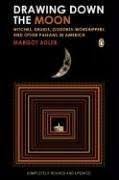

![Drawing Down the Moon: Witches, Druids, Goddess-Worshipp [Premium Leather Bound]](https://i.ebayimg.com/images/g/GBAAAeSwOTdn5mjh/s-l225.jpg)