
Author: A Solitary Pagan


The Kitchen Witch Cupboard
Altar Cloth. Amulets, Talismans, Jewelry. Athame’ or sharp Knife. Baskets. Beads. Bells (brass or glass?). Book of Shadows. Bowls, Platters, Pitcher. Candles and Holders. Capes and/or Robes. Cauldron. Censor or Thurible. Chalice. Charged, pure water. Compass. Crystals and Gems. Crystal Ball (scrying tools). Decanter. Divination Tools (tarot, runes, pendulum, etc.). Earth. Feathers. Felt. Glass jar...
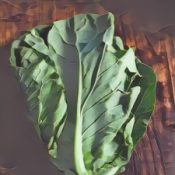

Kitchen Witch: Greens
In general: Greens are linked with fairies in Scotland and Ireland. This may be one reason why green has long been thought to be an unlucky colour. Additionally, greens were once rarely found at wedding feasts and receptions for the same reason—the celebrants didn’t wish to offend the little
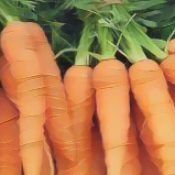

Kitchen Witch: Carrot
(Daucus carota) Planet: Mars Element: Fire Energies: Sex Magical uses: Carrots have been consumed since the days of ancient Greece to induce the desire for sexual contact. Prepared and eaten with the correct visualization, carrots may play a part in overcoming psychological impotency. Cook them with parsley and caraway for the best results.
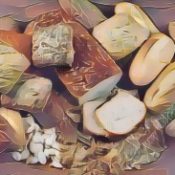

Kitchen Witch: Bread & Grains 1.2
Bread, the basic product of grain, was offered to the deities. Ishtar, Shamash, and Marduk were each given thirty loaves a day in Sumer. Ra, Amon, Ptah, and Nekhbet received their share in Egypt. Demeter, the Greek goddess of bread, grain, and agriculture, was also similarly honoured. The Phoenicians stamped Astarte’s loaves with a horned symbol (linked with the moon) to deify the bread. The anci...


Kitchen Witch: Lentils
(Lens culinaris) Planet: Moon Element: Water Energies: Peace Lore: In 1085 B.C.E., Egyptians traded lentils for the prized cedars of Lebanon. During Graeco-Roman times, the Egyptians offered lentils to Harpocrates. This wonderful food was also eaten by the Sumerians. The Roman naturalist Pliny prescribed lentil soup for creating an even temper. Magical uses: Lentil soup is a warm, nourishing stap...
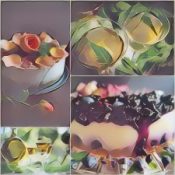

Kitchen Witch: Summer Solstice, June the Twenty-First
The summer solstice is an ancient time of magic. Great fires were lit on hilltops in honour of the zenith of the sun’s strength. Fresh fruits (which are increasingly available as autumn nears) are fine midsummer foods, as are any dishes that use fruit as a major ingredient. In keeping with the heat of this holiday, flaming foods are also appropriate.
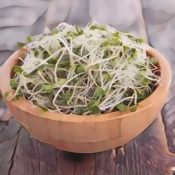

Kitchen Witch: Sprouts
Planet: Various Element: Various Energies: Various Magical uses: Generally, all sprouts are fine for promoting psychic awareness. Here’s a list of some specific sprouts and their energies: Alfalfa (Venus, earth): Money, psychic awareness Bean (Mercury, air): Protection Mung (Mercury, air): Spirituality Soy (Moon, earth): Spirituality, psychic awareness, protection Sunflower (Sun, fire): Protection

Kitchen Witch: Spirulina
Planet: Venus Seaweed salad in bowl, Japanese cuisine Element: Water Energies: Physical energy Lore: After they’d arrived in what is now known as Mexico, the Spaniards observed the Aztecs eating what was described as “green foam” or “green mud.” The custom disappeared as the lakes surrounding what is now Mexico City were drained, and the food remained a mystery for hundreds of years. It seems that...
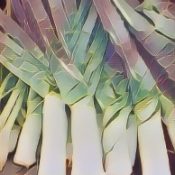

Kitchen Witch: Leek
(Alliurn spp.) Planet: Mars Element: Fire Energies: Protection, physical strength Lore: Leeks are steeped in myth and folklore. In twelfth-century Persia they were worn over the left ear to prevent intoxication. Gerarde, who lived in sixteenth-century England, thought they produced nightmares. In his time, a leek was hidden inside a black cloth and placed under the pillow of an ill person to effec...


Kitchen Witch: Brussels Sprouts
Planet: Moon Element: Water Energies: Protection Lore: Legend has it that Brussel sprouts were created from wild forms of cabbage growing in Babylon. Nebuchadnezzar relied on cabbage to prevent or to cure the hangovers that usually resulted from his fabulous, excessive feasts. He was naturally disturbed that no fresh cabbage was available during the winter. According to this myth, he ordered his ...
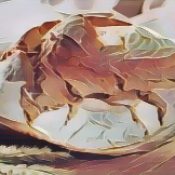

Kitchen Witch: Bread & Grains 1.1
Humans have eaten bread for at least 8,000 years. We have made it round, oblong, square, and triangular; flat as a pancake or fat as a loaf. Bread has been twisted into a symbol of the winter solstice, spiced, sweetened, garlicked, and filled with fresh vegetables. Though it has been made of every grain, it was the raised wheaten form that first inspired human and divine palates. Bread has long be...
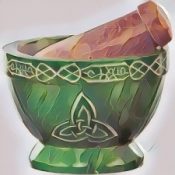

Kitchen Witch: Mortar and Pestle
The blender and food processor of earlier times, the mortar and pestle are still used by some cooks to crush or to grind herbs and nuts. Prehistoric mortars have been found among the archaeological remains of many peoples dating back to neolithic times. Mortars identical to those used by preconquest Mexican peoples are still used in contemporary Mexico. Many Indian tribes of southern California fa...