
Author: A Solitary Pagan
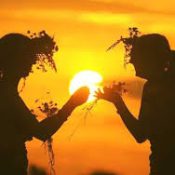

A Summer Solstice Blessing
It’s the midsummer’s evening, the shortest of night, Where our planet is blessed with the greatest of light. The sun at its power, sharing its wealth, With the earth glowing in abundance and health. The trees’ leaves are green, the birds are in song. The days are as warm as they are long. We honor the animals, the plants and living things, The sun and the water and for the life that it brings. May...
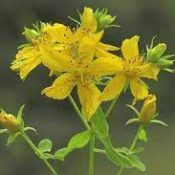

Summer Solstice St John’s Wort Flowers
Typically flowering on the longest day of summer, this ‘sunshine’ plant is a powerhouse of usefulness. Topically it is a skin plant for cuts, burns, wounds, bruises and some skin diseases. You can use it freshly picked, rubbing the flowers straight onto the skin. You can also chop up small or liquidize the top parts (small top leaves but mostly flowers) and put the ‘mash’ over the area as a fresh ...
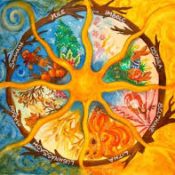

Litha, The Summer Solstice
Time: Three days beginning from sunset around 20 June (20 December in the southern hemisphere) Focus: Full potency, illumination, mysteries revealed; healing, the height of joy, fulfilment, the need to seize the moment. The summer solstice has been celebrated in cultures as far apart as Russia and North America, where Sun dances were an assertion of power and courage and in a new form still bring ...
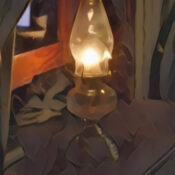

Lamp Magick
Lamp magick is a flexible and symbolic practice that uses the four classical elements—earth, air, fire, and water—to help manifest intentions and desires. Each part of the lamp represents a different element, and together, they create a focused tool for spellwork. This overview explains each component and offers practical steps and examples to support your journey. The base of the lamp represents ...
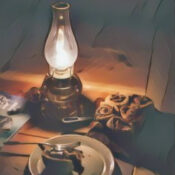

Lamp
Lamps and lanterns are often seen as symbols of life, divine light, immortality, intellect, guidance, and important transitions. Lighting or extinguishing a lamp can represent the beginning or end of a life. Because lamps bring light to darkness, they are also associated with truth and wisdom. The pottery or earthenware lamp is sometimes used to symbolize humanity itself. The oil inside the lamp p...

Lammas , The Festival and its Meaning
The two names “Lammas and Lughnasadh” for the festival points to the fact that it is both a time to celebrate and remember the passing of the god and the year. At Lammas we celebrate the first harvest. Fruits and berries are ripening, seeds are being scattered and the first of the corn is being cut. But the days are noticeably getting shorter: the colours of the countryside are the browns of dry g...
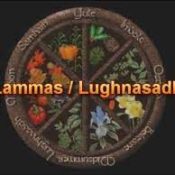

lammas: Crafts, Song and Celebration
Because of its association with Lugh, the skilled god, Lammas (Lughnasadh) is also a time to celebrate talents and craftsmanship. It’s a traditional time of year for craft festivals, and for skilled artisans to peddle their wares. In medieval Europe, guilds would arrange for their members to set up booths around a village green, festooned with bright ribbons and fall colors. Perhaps this is why so...
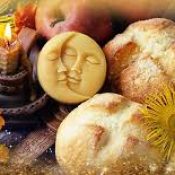

Lammas: Symbols of the Harvest
The harvest is here, and that means it’s time to include symbols of the fields on your altar. Sickles and scythes are appropriate, as are baskets. Sheaves of grain, fresh picked fruits and vegetables, a jar of honey, or loaves of bread are perfect for the Lammastide altar. Other symbols of Lammas, or Lughnasadh, that you might wish to use include:
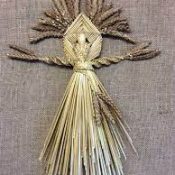

Corn Dolly
A ritual doll, or variation of a poppet, used in traditional seasonal rites for the fertility of the land. The corn dolly is a harvest figure made of either the last or first sheaves of grain. It is placed in the fields or used as a charm in fertility rites or as a centerpiece in seasonal celebrations. Corn dollies are hung in homes or fed to livestock as a magical charm for their well-being. Mode...
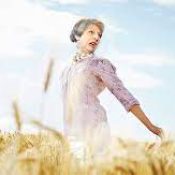

Lammas: Honoring the Past
In some modern Pagan traditions, Lammas is also a day of honoring Lugh, the Celtic craftsman god. He is a god of many skills, and was honored in various aspects by societies both in the British Isles and in Europe. Lughnasadh (pronounced Loo-NAS-ah) is still celebrated in many parts of the world today. Lugh’s influence appears in the names of several European towns. In our modern wo...
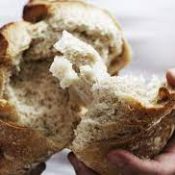

Lammas: Bread Sacrifice Ritual
Lammas is a time of celebrating the beginning of the harvest, a theme seen often in the sacrifice of the grain god. Make a sacrifice of your own this Lammas, with this bread ritual that marks the beginning of the harvest. Grain is the heart of Lammas, and the beginning of the harvest season is a milestone in many societies. Once the grain is threshed and milled it is baked into bread and consumed,...
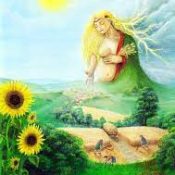

Lammas
At Lammas, also called Lughnasadh, the hot days of August are upon us, much of the earth is dry and parched, but we still know that the bright reds and yellows of the harvest season are just around the corner. Apples are beginning to ripen in the trees, our summer vegetables have been picked, corn is tall and green, waiting for us to come gather the bounty of the crop fields. Now is the time to be...