
Author: A Solitary Pagan

The Practice of Magick
Candle magick may be the most basic form of magical practice. It can be very simple, prayer and lighting a candle before an image or in a special place. Or you can anoint the candles with herb-infused oils to draw upon the power of the herb devas, and inscribe the candle, dedicate it to a magical purpose, and light it with the ceremony. Candles can be added in with any other work you are doing. Ma...

Magical Journaling for SelfCare
Journaling is a therapeutic practice. It’s also a valuable part of working magic. Keeping records of your work allows you to consult notes regarding herbal or incense blends, timing, successes and failures, origins of ideas, references, and experiments with energies of varioussupplies and components. Partnering or uniting the concepts of reflective self-care journaling and magical journaling in pu...

The Modern Magical Revival
The modern magical revival has been unfolding for over a century. As a spiritual movement committed to the resurgence of esoteric knowledge or gnosis in the West, it first began to gather momentum in the final decade of the 19th century. Magick has since seeded itself around the world in fascinating ways, spawning divergent esoteric groups and organizations. In terms of actual historical beginning...

Magickal Correspondences and Invocation
Magick teaches us that everything in the Universe is connected. Correspondences are magickal associations. They link herbs, animals, crystals, colors, lunar phases, and so on with specific energies, and thus with intended magickal results. Correspondences are powerful keys that help to open specific doors, and thereby direct magickal energy in desired ways. For those who have prior knowledge of ma...
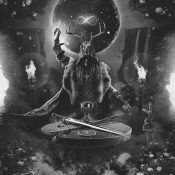

Magick: The evils of Magick
“Magic is supernatural.”“Magic is evil.”“Magic is dangerous.”“Magic is illusion.” These statements, all false, have been passed down to us by earlier generations of nonpractitioners. Only those who haven’t worked magic believe these ideas to be true. All of the statements have also been made about many other practices in earlier times: mathematics, chemistry, psychology, psychics, astronomy, ...
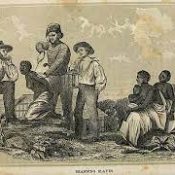

Slavery in Magick
I do not come to bring absolute truths and no discourse that opposes the personal path of each one. But we need to talk about slavery in magic, the worst thing is that slaves are slaves to themselves. Not neglecting any modern magic systems and strands. But neophytes, interested in the occult, beginners owing to the great mass of “selling ideas” have taken on essential values and principles. Wha...
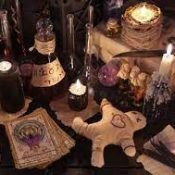

Different Kinds Of Magick
What is certain is that whether folk customs or more formal ceremonies are used, the underlying principles of all types of magick are the same throughout the world, Some of these can be categorized under the following headings. Sympathetic Magick This involves performing a ritual that imitates what you would desire in the outer world, so bringing on to the material plane a desire or need or wish f...
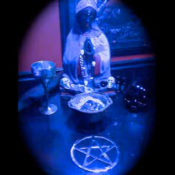

Connected to Magick
Magic, entities, gods, strands, oracles, everything connected to magic, we first have to understand that it is our work directed also in search of our true transformation that dwells in magic, that moves. We live in times of working the warrior and resilient archetype. Search our strength in destruction. It doesn’t matter who you name your son and don’t make and don’t sow to reap. There are those ...
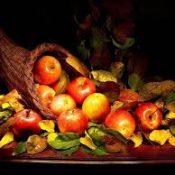

Apples for Mabon
Apples are the perfect symbol of the Mabon season. Long connected to wisdom and magic, there are so many wonderful things you can do with an apple. Find an orchard near you, and spend a day with your family. As you pick the apples, give thanks to Pomona, goddess of fruit trees. Be sure to only pick what you’re going to use. If you can, gather plenty to take home and preserve for the coming winter ...
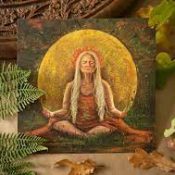

Mabon: A time for welcoming the Vine Gods
At this time of year, grapes can be found everywhere. Bearing this in mind it is no great surprise to find that the Mabon season can be a popular time for winemaking as well as celebrating the deities connected to the growth of this particular fruit. Whether you see your particular deity as Bacchus, Dionysus, the Green Man, or some other vegetative god, the god of the vine is a key archetype in ha...
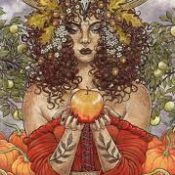

Count your blessings at Mabon
Mabon is a time of giving thanks, but sometimes we take our fortune for granted. Sit down and make a gratitude list. Write down things that you are thankful for. An attitude of gratefulness helps bring more abundance our way. What are things you’re glad you have in your life? Maybe it’s the small things, like “I’m happy that I have my cat Peaches” or “I’m glad my car is running.” Maybe it’s someth...
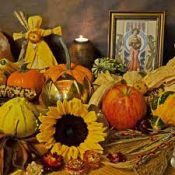

Mabon
Autumn Equinox, 2nd Harvest, Falls Between September 21 – 23 Mabon, (pronounced MAY-bun, MAY-bone, MAH-boon, or MAH-bawn) is the Autumn Equinox. The Autumn Equinox divides the day and night equally, and we all take a moment to pay our respects to the impending dark. We also give thanks to the waning sunlight, as we store our harvest of this year’s crops. The Druids call this celebration, Mea’n Fo’...