
Author: A Solitary Pagan


What is Witchcraft
Witchcraft is the set of beliefs and practices employed by Witches in ritual and spellwork. Often, magical work is incorporated into the Shabbat and Esbat celebrations observed by covens and solitary Witches, though spellwork may be employed on its own on other occasions. In fact, many Witches consider themselves to be constantly “practising” their Craft in their daily lives through the use of med...

Some Basic Beliefs of Witches, Part One
One of the witches’ most important basic beliefs, obviously, is the reality and possibility of magic. This involves the idea that the physical world is only part of reality, the part that we are able to apprehend with our five senses. Beyond are vaster realms; and in these the witch seeks to venture. This, again, involves a further belief, namely that human beings have more senses than the usual r...

The Witches’ Darkened Room
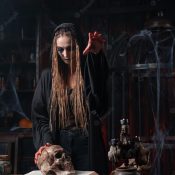
Within the corner of a darkened room, a woman sits on a chair and hums a repetitive tune. Her eyes are closed and she rocks back and forth, back and forth, back and forth-seeming to sway in some invisible wind like the rushes on a lakeshore. Her hands are moving between threads as she weaves and plaits them, every now and then stopping to tie a knot; the silence more permeable for the lack of song...

Antiquity in Witchcraft
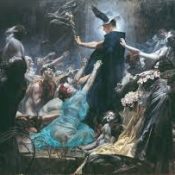
Witchcraft is as old as the human race. It dates from the days when, by the flickering light of a clay lamp, a Stone Age artist worked in the silent depths of a cave sanctuary, drawing upon the walls the great beasts he hunted for his food. Sometimes he depicted the beasts with arrows and spears in them, in order to gain power over them by sympathetic magic. Sometimes he showed them in sexual unio...

Cunning Man & Cunning Woman
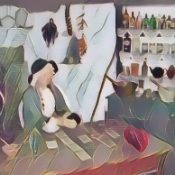
Village witch or healer who provided cures, remedies, charms, spells and divination, usually in exchange for a fee or gift. “Cunning” comes from the Old English term kenning, meaning “wise” or “knowledgeable.” Other terms for cunning man and cunning woman are wise man, wise woman, sorcerer, wizard, conjurer, charmer, blesser, white witch and witch. Traditionally, cunning men and women came into th...

Witchcraft in the Bible
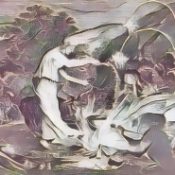
The best-known Biblical text referring to witchcraft is verse 18 in the twenty-second chapter of Exodus, which states: “Thou shalt not suffer a witch to live.” It is printed on the title-page of The Discovery of Witches by Matthew Hopkins, the notorious Witch-Finder General. His book was published in 1 647, “For the Benefit of the Whole Kingdome”. This supposed portion of the word of God has been ...

Crossroads A heavily charged place of Magick
The Greek goddess of witchcraft, Hecate, was also the goddess of the crossroads, and animals were sacrificed to her at such locations. It was believed that Hecate appeared at crossroads on clear nights, accompanied by spirits and howling dogs. Offerings were placed there to propitiate her and ask for her intercession in cases of madness, which was believed to be caused by departed souls. In Irelan...

Some Basic Beliefs of Witches
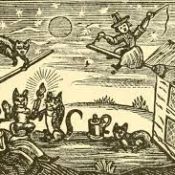
One of the witches’ most important basic beliefs, obviously, is the reality and possibility of magic. This involves the idea that the physical world is only part of reality, the part that we are able to apprehend with our five senses. Beyond are vaster realms; and in these the witch seeks to venture. This, again, involves a further belief, namely that human beings have more senses than the usual r...

African Witchcraft
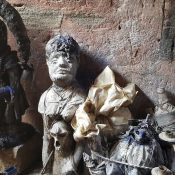
In African tribal traditions, witchcraft is part of the accepted supernatural landscape and is generally something to be feared. Study of African tribal religions illustrates the African ancestry of modern Vodun, Santería and Candomblé. There is a fairly universal belief in a supreme God, who manifests himself in light and brightness: a shining, snowcapped mountain, or the light streaming through ...
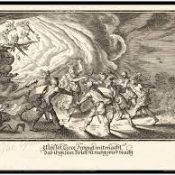

Metamorphosis
The ability of witches, sorcerers and other magically empowered persons to transform themselves and other humans at will into animals, birds and insects. In witchcraft trials, people testified that the accused witches had appeared before them or tormented them in some nonhuman shape. For example, in 1663 Jane Milburne of Newcastle, England, did not invite Dorothy Strangers to her wedding supper. ...
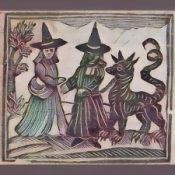

A History Of Witchcraft
Witchcraft probably originated about 25,000 years ago in the Palaeolithic era. At that time, humankind and nature were seen as inextricably linked. People acknowledged every rock, tree and stream as deities in the life force, and the Earth as mother, offering both womb and tomb. Early man used sympathetic, or attracting, magick – in the form of dances, chants and cave paintings of animals – to att...

A Call for Respect of your fellow Witches
I respect the solitary witches who blaze your own trails, walk your own paths, and listen to your own gods. It can be a lonely, yet rewarding, life. It is not for the faint of heart. From the solitary we can all learn self-reliance and how to listen to our intuition. I respect the witch who chooses a traditional coven. Whether it is Gardnerian, Alexandrian, reconstructionist, or another group, it ...