
Author: A Solitary Pagan
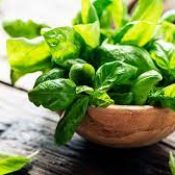

The Usage of Basil
Basil has been called “the Witches Herb” for centuries. Basil has been used for exorcism, protection, in “flying ointments”, and love potions. “Where Basil grows, no evil goes!” and “Where Basil is, no evil lives,” goes the old adages. Basil, given as a gift, will bring good luck to a new home. Sprinkled around the house, it wards off evil. Soak it in water for three days and sprinkle the water at...
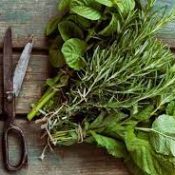

How to Harvest Plants and Herbs
Four Methods of Drying Plants and Herbs Plants and herbs dried in a controlled heat environment are generally superior to ones dried in the sun with reference to their flavor, color, and nutrition. Another plus for drying the plants in controlled heat is they’ll be free from bugs and flying insects. (Less cleaning afterwards.) But like all good things, controlled heat drying requires additional eq...
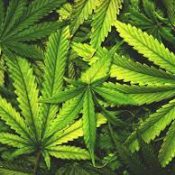

Hemp
Folk Names: Chanvre, Gallowgrass, Ganeb, Ganja, Grass, Hanf, Kif, Marijuana, Neckweede, Tekrouri, Weed Gender: Feminine Planet: Saturn Element: Water Powers: Healing, Love, Visions, Meditation Magical Uses: Marijuana, or hemp as it was commonly named, was once widely used in magic. Due to laws enacted during the 1930’s which restrict its use and sale, many of these practices are dying out. Here is...
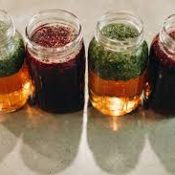

Herbal Infusions
As well as magical sachets, you can make herbs into infusions. Add one level teaspoon (5 ml) of coarsely chopped dried herbs or two level teaspoons (10 ml) of freshly chopped leaves or flowers to a cup of boiling water; leave it for five minutes and strain. Once the liquid has cooled, you can sprinkle it round rooms, furniture and personal property or add it to a bucket of water for washing floors...
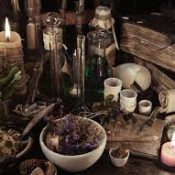

Guide to Magical Herbs
All herbs and plants are magic: they are the pure embodiments of the Earth’s spirit, sustaining themselves with sunlight, vibration, water, and stardust (minerals). Herbs and plants feed us, nourish us, and heal us. Indivisibly, they are a necessary and integral part of our magical and spiritual lives as well. There are certain herbs that, after thousands of years of ancestral practice, seem to po...
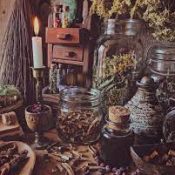

Theories of how Herbal Magick may Work
How does herbal magick work, anyway? A sachet of leaves tucked under a pillow, a handful of berries strewn across a doorway: Herbal charms and remedies are one of the most familiar forms of magick. Herbal (“green”) witches keep elaborate pantries of herbal ingredients, each with a different power to enlighten or heal, bother or protect. (To be clear, we’re talking about the ritual use of herbs her...
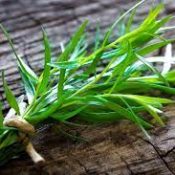

French Tarragon
French tarragon is the variety generally considered best for the kitchen. Russian tarragon can be grown from seed but is much weaker in flavour when compared to the French variety. It seems to be one of the least familiar of the culinary herbs that is commonly found in dried and fresh forms in grocery stores. French Tarragon is easily grown in many climates and has a wonderful anise flavour simila...
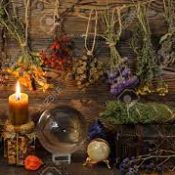

Magickal Uses for Herbs
Herbs by themselves have little magickal power. In order to practice powerful witchcraft using herbs, the herbs must be infused with power. This is advanced magick and requires the ability to invoke/evoke and direct the elements. Each herb carries elemental properties that correspond to its medicinal uses. These can be found under planetary rulerships. In addition, to really empower herbs, planeta...
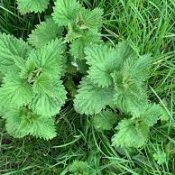

The Hedge Craft – NETTLE (Urtica Dioica)
NETTLE (Urtica Dioica); Plant Family: (Hamamelids) Parts Used: Leaves, buds, rhizomes and roots. Collection season: early spring for leaves and buds until they flower, seeds and roots in autumn. Soil and Environment: Universal throughout British Isles and most of temperate world, found in forests, woods, river banks, under shrubs and bushes, wasteland – pretty much anywhere. Thrives in nitrogen-ri...
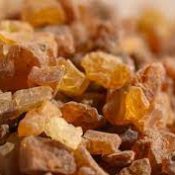

Myrrh
(Commiphora myrrha) P Ub Folk Names: Gum Myrrh Tree, Karan, Mirra Balsom Odendron Gender: Feminine Planet: Moon Element: Water Deities: Isis, Adonis, Ra, Marian Powers: Protection, Exorcism, Healing, Spirituality Ritual Uses: Myrrh was burned to Ra at noon in ancient Egypt and was also fumed in the temples of Isis. Magical Uses: Burned as incense myrrh purifies the area, lifts the vibrations, and ...
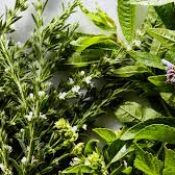

The Powers of Herbs
How does it work? When people discover I’m a magical herbalist, this is one of two questions asked. The other usually refers to my state of mental health. Nonetheless, the first question is a valid one and has never been satisfactorily explained. The basis of herb magic—and all magic—is the power. This power has worn many names and forms through the centuries; at times even its existence was kept ...

Herbs
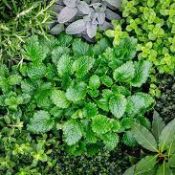
Herbs provide us with an abundance of medicinal, as well as magickal substances. Most herbs are easily grown and cared for because in reality, they are weeds. Herbs will grow in the shade, in between rocks, thrive in sandy soil, and can go for long periods of time without water. Once planted, herbs return year after year and serve as a useful as well as decorative ground cover. Along with their ph...