
Author: A Solitary Pagan
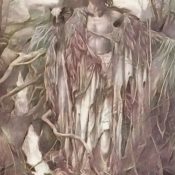

Merlin
Merlin was as Archetypal wizard of Arthurian lore. Merlin is a Latinized version of the Welsh Myrddin. His exact origins are lost in myth; he may have been a god, perhaps a version of Mabon or Maponos, the British Apollo, the divine ruler or guardian of Britain. The name Merlin may have been given to a succession of wizards. There is no concrete evidence, but it is likely that a Merlin, who was a ...
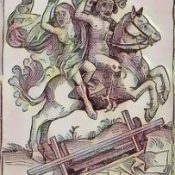

Berkeley Witch
In English folklore, the Berkeley Witch was a wealthy woman who lived during the time of the Norman Conquest in the town of Berkeley in England’s heartland. She was wealthy and well liked, and lived luxuriously. Her secret, kept until she was close to death, was that her wealth was given her by the Devil, in a pact for her soul. Apparently, she earned the name witch because she sold her soul to t...
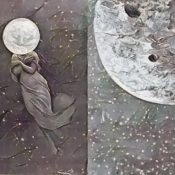

Lunar Folklore
If the Moon is feminine in nature, how did we ever come up with the “man in the Moon?” Even though this idea is often thought of as strictly an American invention, such is not the case. The Sanskrit word for moon is “mas,” which gives it a masculine form, and etymologists have long debated over whether the same is true of the earliest Teutonic languages. Be that as it may, the concept of the Moon’...
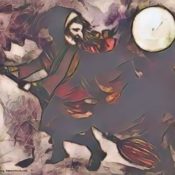

Befana
Befana is an old woman who delivers gifts to children throughout Italy on Epiphany Eve (the night of January 5). A popular belief is that her name derives from the Feast of Epiphany or in Italian La Festa dell’Epifania. . In popular folklore, Befana visits all the children of Italy on the eve of the Feast of the Epiphany to fill their shoes with candy and presents if they are good. Or a lump of co...

Folk Magick And Ritual Magick
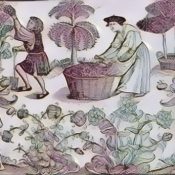
Whether you are casting a simple spell, using items from your kitchen cupboard, or performing a complicated group ceremony, the source of the power behind it is the same. Every spell or ritual involves channelling the life force that runs through all forms of existence and transforming it into higher spiritual energies. These spiritual powers include our own evolved self, which some say is formed ...

Apples in Folklore
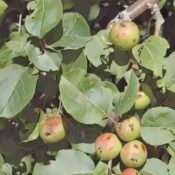
Apples, cultivated in Britain as early as 3000 b.c.e., have had a long association with magic, witches, and goddesses. Magic apple lands, whose fruit gave eternal life, were cultivated by various Western pagan goddesses, among them the Greek Hera, the Scandinavian Idun (Idhunn), the Teutonic Freya and the Norse Hel, Queen of the Underworld. In Iroquois myth, the apple is the central tree of heaven...

Hag
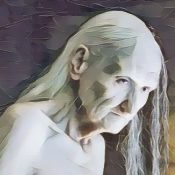
A Hag is an old, ugly woman believed to be a witch or sorceress; also, a supernatural, demonic being whose powers enable her to live an incredibly long time. The origin of the term “hag” is found in the ancient Goddess beliefs and myths of the Egyptians, Greeks, Celts and pagan Europeans. The Egyptian was a matriarchal ruler in predynastic times, one who commanded the names of power. Many Celtic m...

Mother Shipton
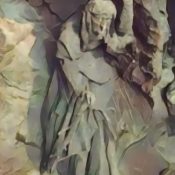
A 15th-century English witch and seer who supposedly prophesied scientific inventions, new technology, wars and politics through several centuries, all written in crude rhymes. The books of her “prophecies” are likely the invention of later writers, among them Richard Head, who published a book of her predictions in 1667; an anonymous writer who published the Strange and Wonderful History of Mothe...
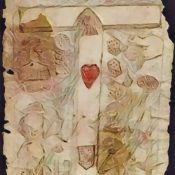

Girdle Measuring
An old technique of magical healing by wise women and men, wizards, and witches involving the measuring of the patient’s girdle or belt. Changes in girth revealed the presence of evil spirits or fairies that had invaded the body to cause the illness. After exorcising the entity, usually through charms, the witch took another measurement to verify that the spirit was gone. Some cures involved the r...
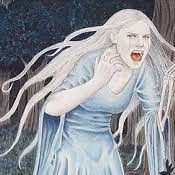

Banshee
It is the duty of the banshee or ‘woman of the fairies’ to foretell the death of an individual. Banshees are attached to particular families and their cry is only heard when a family member is about to die. Banshees are reported either to be young women of mournful aspect or else to take the form of hags. With eyes red from weeping she continually combs her hair with a gold or silver comb. The cri...
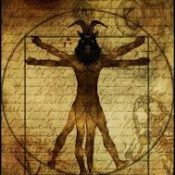

Shape Shifting
Spells designed to bring about a difference in bodily appearance in order to dissolve mischievous enchantments by the fairy folk or frequenters of the lower world were legion in most cultures. In Celtic lore for instance, during the process of dissolving the enchantment, having cast a magic circle, the rescuer had to keep repeating the name of the enchanted person to remind them of who they truly ...
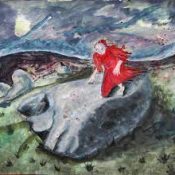

Mother Redcap
A name applied to English ale-wives, wise women and witches. It was also given to familiar animals. One Mother Redcap was an elderly woman who lived in a village about 14 miles from Cambridge, England, who was known as a witch. She said she was endowed with her witch powers in circumstances reminiscent of the Devil’s pact legends of medieval centuries. According to an article published in the Lond...