
Author: A Solitary Pagan


Slavic Witch
To be a Slavic witch, one possess the ability to astral travel and fall easily in and out of trance states. Furthermore, Slavic witches observe three major taboos during ritual; nudity, silence, and not looking back after the working’s conclusion. These correspond to the three Slavic principles (Prav, Jav and Nav) and the three forces (Um, Život and Rod). First the witch must approach her/his gods...
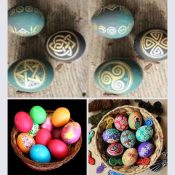

Blessing Eggs
Blessing eggs are blown-out eggs that are refilled with herbs, oils and whatever else you want to use to symbolize a blessing you wish to receive yourself or you wish to give to someone else. To begin, make two holes, one at each end of the egg. Make one hole a little larger than the other so that you can fill the egg back up. Using the Ostara correspondence below, choose the herbs, flowers, oils ...
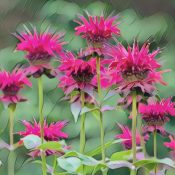

Bee Balm
Although Bee Balm is somewhat of a giant in medicine and aromatherapy applications, uses in folklore and magic are surprisingly rather sketchy and hard to find for this herb. Of course, for purifying and relaxation spells, Bee Balm is top notch when leaves and flowers are tied in a cloth and placed under hot running bathwater, and as such, this is considered a good addition to spells or rituals co...


Hag Stones
The Hag Stone, a naturally occurring stone shaped by the persistent forces of tides and winds, is easily recognized by the natural hole that passes through its center. This unique formation has captured human imagination for millennia, and the stone is known by many names across cultures: the Great Mother Stone, Odin Stone, Witch Stone, Faerie Stone, Wishing Stone, Seeing Stone, and Adder Stone. I...
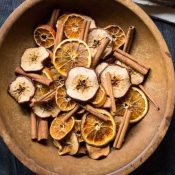

Mabon Simmer Pot
Mabon is the 2nd Harvest of the year and falls on the Fall equinox. During this time, we give thanks for the harvest and blessings bestowed upon us. Make sure to give yours. With this simmer pot as you add each ingredient be sure to give your thanks for that item and the work it provides. Ingredients • Water, moon water if you prefer • Nutmeg Fresh or ground. For luck, prosperity, and clairvoyance...


Superstitions that Could Be Magickal Knowledge
1. Knocking on Wood when ill Omen is presented. Maybe the most popular superstition is knocking on wood every time ill fate is predicted. We actually do this when carriers of bad luck are presented or someone talks ill about you or someone you love. The Arcane Truth: Knocking on Wood actually comes from the belief that every tree is inhabited by a spirit known as a Hamadryad or Dryad. The action o...
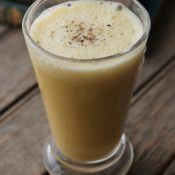

Bannocks
Bannocks are traditional Scottish Beltane fare, dating centuries back. And often paired with a Caudle, also a traditional Beltane drink. Following is a recipe that was taken from Tairis, which is a gaelic polytheistic website INGREDIENTS: 1/2 pt (1 cup) milk 1 tbsp oatmeal 2 beaten eggs 1 tsp sugar or honey salt nutmeg or mixed spice whisky, ale or white wine DIRECTIONS: 1. Heat the milk in a...


Origins of Litha
Litha is a pagan holiday; one of their eight sabbats during the year. Litha (also known as Midsummer) occurs on the summer solstice, and celebrates the beginning of summer. The traditions of Litha appear to be borrowed from many cultures. Most ancient cultures celebrated the summer solstice in some way. The Celts celebrated Litha with hilltop bonfires and dancing. Many people attempted to jump ove...


Summer Solstice Celebration
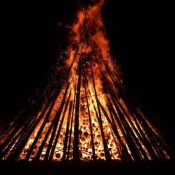
Summer Solstice presents us with a time to celebrate! The Summer Solstice arrives on the longest day and the shortest night of the year. Solstice happens twice each year – in Winter near December 21 and in summer near June 21. The festival is sometimes called “Litha,” which means light. “Solstice” means sun stand. The sun is at the height of its power during Summer Solstice and appears to linger a...

Summer Solstice
Since the bleak midwinter, the sun’s litha has been steadily growing. The earth is bursting with beauty and bounty. The Mother Goddess is great with child at Summer Solstice and the Oak King is at his height of power and success. Now is the time to notice and appreciate fullness, blooming, creativity, individuality and fulfillment of promise. As with each of the Celtic festivals, fire plays a huge...


The crone aspect of the Female Metaphor
The crone aspect of the Female Metaphor is commonly interpreted as a symbol of accumulated experience and the acceptance of endings. In various ancient societies, the crone was regarded as a figure associated with regeneration and insight. She was often described as a keeper of mysteries and a guide through transitional periods, representing knowledge gained through exposure to both positive and n...

A Witch honours Women’s Day
Fathers and Mothers are equals in the seeds of nature, one gives birth the other maintains its direction, it is easy to find faults in each others company, but know nature prizes life and falls ill at the idea of new death, what can one say about growth but the hope and love that is shared and given from one world and the next, but when this freedom to be the giver and taker is removed without th...