
Author: A Solitary Pagan


England Was Pagan Before Christian 6 The Witch Hunts and Suppression of Paganism
As Christianity became firmly established, the Church sought to enforce religious conformity and eliminate practices it deemed heretical or pagan. This effort reached a dark climax during the witch hunts, which swept across England and much of Europe from the late medieval period into the early modern era. Accusations of witchcraft were often directed at those—especially women—who maintained folk ...
England Was Pagan Before Christian 5: Continuity and Transformation
This blending of traditions created a unique spiritual landscape in England, where ancient customs lived on, sometimes hidden in plain sight. Folk rituals, seasonal celebrations, and respect for the land continued, even as their outward forms changed. For example, the maypole dance, once a pagan fertility rite, became a village celebration of spring. The practice of wassailing, originally a blessi...
England Was Pagan Before Christian 4 Adopting and Adapting Pagan Traditions
As Christianity spread, it did not erase the old ways overnight. Instead, many pagan customs and traditions were adopted or transformed to fit the new faith. For example, the festival of Yule, which celebrated the winter solstice and the rebirth of the sun, was merged with Christmas, the birth of Christ. The tradition of decorating with holly, ivy, and mistletoe—plants sacred to the pagans—became ...
England Was Pagan Before Christian 3 The Introduction of Christianity
Christianity first arrived in Britain with the Romans around the 2nd century CE. Some local people adopted the new faith, but after the Romans left in 410 CE, much of their influence faded. A more organized effort to spread Christianity began in 597 CE, when Augustine of Canterbury arrived with the support of Pope Gregory. The strategy focused on converting local rulers, with the hope that their p...
England Was Pagan Before Christian 2 Pagan Customs and Traditions
The pagan calendar was filled with festivals marking the turning of the year—Imbolc, Beltane, Lughnasadh, and Samhain. These celebrations honored the cycles of nature, the fertility of the land, and the changing of the seasons. Bonfires, maypole dances, and the gathering of sacred plants like mistletoe and Anemone were common features. Many customs, such as decorating homes with greenery at midwin...
England Was Pagan Before Christian 1 Before the Arrival of Christianity
It is sometimes said that England has always been a Christian nation. However, for over a thousand years before the arrival of Christianity, England was a land deeply rooted in pagan beliefs, customs, and traditions that shaped every aspect of daily life. In ancient times, Britain was inhabited by Celtic tribes who honored a diverse range of deities. Among them were Brigid, associated with fire, p...


Alstroemeria Summer Breeze: The Magick of
Alstroemeria Summer Breeze is a stunning perennial known for its vibrant colors and intricate patterns. The flowers come in shades of pink, yellow, and orange, often with unique markings that add to their beauty. The leaves are long, lance-shaped, and a rich green, providing a lush backdrop for the bright blooms. Alstroemeria thrives in well-drained soil and prefers a sunny location, although it c...
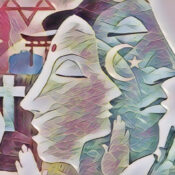

Religious Control and the Subversion of Witchcraft: A Meditation for Inner Liberation
Meditation practices are sometimes used to explore concepts of inner liberation and personal empowerment. The following describes a meditation that focuses on these themes. Overview:A quiet, undisturbed environment is often chosen for meditation.Participants may sit comfortably, close their eyes, and take deep breaths to focus attention.A common visualization involves imagining a bright light orig...
Religious Control and the Subversion of Witchcraft: A Spell for Cutting Cords from the lingering influence of Religious Control
In some modern witchcraft practices, individuals may use symbolic rituals to address the lingering influence of religious control, particularly from Christian traditions. One example of such a ritual involves the following materials:Black thread or string,Scissors,A black candle,A piece of paper,A pen or pencil.The process typically begins with preparing a personal or sacred space and lighting the...
Religious Control and the Subversion of Witchcraft: A Ritual for Reclaiming Power
One approach to exploring personal empowerment in witchcraft involves a ritual that focuses on breaking free from internalized limitations. The ritual typically includes the following items:A black candle,an athame or sharp object,a bowl of saltwater,and a mirror.The process often begins with casting a circle, followed by lighting the black candle and placing it in front of the mirror. Participant...
Religious Control and the Subversion of Witchcraft: Liberation from Religious control
The process of moving away from Religious influence in spiritual practices is often described as a journey of self-exploration and personal empowerment. Several approaches are commonly observed in this context: These practices are often associated with the idea of reclaiming personal sovereignty and power.
Religious Control and the Subversion of Witchcraft: Unveiling the Shadow
Religious Control and the Subversion of Witchcraft: Unveiling the Shadow. Throughout history, witchcraft has been deeply influenced, shaped, and at times actively suppressed by a wide range of religious ideologies and institutions. This chapter delves into the complex historical and cultural forces that have contributed to the ongoing interaction between religious authorities and the practice of w...