
Author: A Solitary Pagan
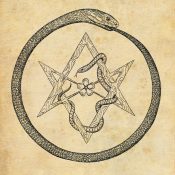

Magick is neither black nor white, good nor evil.
The terms “helpful” or “baneful” are simply perceptions of magick’s dual nature. Witches work to be neutral—to walk in balance and to work impartially somewhere in the center between the two extremes. This walking neutrally between the worlds is a study in polarity. We are not one or the other but shades of both. With prosperity magick, the principle of polarity is manifested as giving and receivi...


The principle of correspondence
The principle of correspondence also directs us to the most harmonious tools and spell accoutrements for our magick, as in a table of correspondences. Specific crystals and herbs can activate certain energies that are naturally associated with your various magickal goals. Color is a prime example. Yellow flowers, especially those with solar shapes like the sunflower, are typically associated or pe...

The Principle of Cause and Effect
This principle illustrates that there are no coincidences; nothing happens by chance. Chance is a name for an unrecognized law. I have seen this explained this way: “There are many planes of causation, but nothing escapes the law,” which is a classy way to say that for every spell outcome there is a prior action, or cause. What we send out energetically or through spellwork, be it positive or bane...
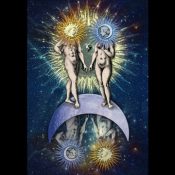

The Principle of Gender
This principle is simply the law of polarity put in action. Masculine and feminine principles are always at work in the world, whether we recognize them or not. We are all a blending of both masculine and feminine energies. Classically, feminine energy is considered to be magnetic, as feminine energy draws in and is nurturing and yielding, while masculine energy projects out and is strong and asse...

The Principle of Rhythm
This principle teaches us that everything flows and all things are in some way circular or cyclical. In order for our magick to be most effective, we must work with the natural rhythms of the seasons, the wheel of the year, the moon, and the rhythm of our lives. In the spring new life pushes its way into being. Energy, enthusiasm, and new beginnings are the tides of energy. In the summer there is ...
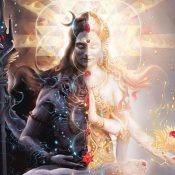

Seven Hermetic Principles
The Principle of Polarity This principle shows us that everything is relative to something else—all things have an opposite, and all things are dual. Poverty is at one end of the scale and wealth is at the other. Also, here is a big mystery for you to wrap your mind around: each of the opposite characteristics contains the essence of the other; the best example of this thought is the yin and yang ...


Hares
Despite hares being seen as unlucky in British Folklore, its actually a white hare that was thought to be unlucky, well more so a foreboding + that your normal brown hares crossing your path was lucky. Then there’s the whole thing of witches disguised as hares……..well more so they were believed to use hares as a distraction. Some say that a witch could put their fetch into a hare (or rabbit) or co...
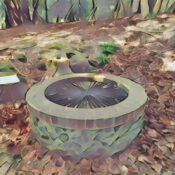

St. Frideswide’s well
St. Frideswide’s well is found in the village of Frilsham, Berkshire. This small place is rich in history, legend, and spiritual tradition. Across the British Isles, many holy wells like this one exist. Each has its own story and meaning. For centuries, people have visited these sacred sites to ask for healing, protection, or even to seek justice. In folk magic, wells are seen as special places th...
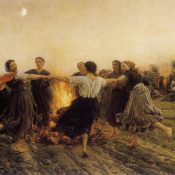

St John’s Eve
St John’s Eve, the feast day. Although the eve is the ritualist celebration side and the feast day being on the 24th,the feast day of St.John the baptist. Whilst the summer soltice is a big celebration, around a folk practitioner’s side or in Ireland (noted in other regions too, Johnasmass in Scotland) the summer soltice would have been celebrated more towards St. John’s eve than on th...
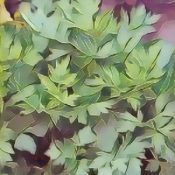

Fumigation
Fumigation was a traditional way to treat sickness such as colds, flu, tuberculosis, fever etc throughout Scotland, Ireland, England, Wales and many other countries. Traditionally it would have been Juniper used but here in the UK, Mugwort (Artemisia vulgaris) was used too. This would have started by lighting a Need-Fire (in most cases), which was traditionally done as a magical aspect of protecti...
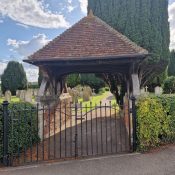

The Lychgate
The Lychgate—sometimes called the lichgate, lyke gate, or Wych gate—is an important feature in British and Northern European funeral traditions. A Lychgate is a roofed gateway, usually made of timber and stone, found at the entrance to a churchyard. The name comes from the Old English word “lich,” meaning corpse, and “gate,” which refers to its role as a threshold. Traditionally, the Lychgate mark...
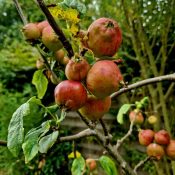

The Crab Apple Tree
The crab apple tree, official name being Malus sylvestris, is a native apple to the UK. Infact, it’s an important species of apple being that it’s the great ancestor of which all apples descended from. Crab apples are full of antioxidants, vitamins (C) and fibre, as they say “eat an apple a day to keep the doctor away”. However the crab apple has a bitter/sour taste to it a...