
Author: A Solitary Pagan
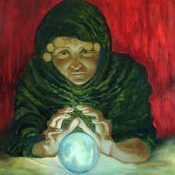

Soothsayer
Literally, “truth sayer.” An old word for prophets, visionaries, seers, and fortunetellers. The word could be used for anyone who predicts the future. Another word meaning the same thing is Mantis (“Diviner”), as in the insect known as the Praying Mantis. The many techniques of divination are called “The Mantic Arts,” and practitioners are called “-mancers.”
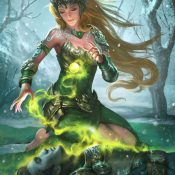

Enchantress/Enchanter
Unlike sorcery, enchantment has very positive connotations. Enchantresses are “bewitching,” fascinating, charming, sexy women whose magick brings delight and pleasure to others. The word is often used as a compliment for particularly attractive and charismatic Witches and Gypsies. A man who embodies those characteristics may be known as an Enchanter, though this term is rarely used for men.
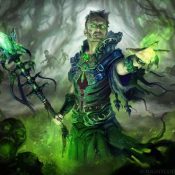

Sorcerer/Sorceress
Sorcery implies some sort of supernatural power over people and their affairs. People who wield such magickal charm or influence are called Sorcerers (or Sorceresses in the case of women). This term has a generally negative connotation, implying evil or “black” magick. The most famous Sorceress of legend was Circe (SUR-see). In Homer’s Odyssey, she turned Odysseus’s men into pigs.
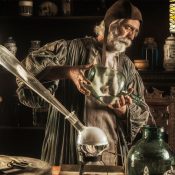

ALCHEMIST
Alchemy was the forerunner of modern chemistry, blending Egyptian metallurgy with Greek philosophy and Middle Eastern mysticism. The goals of Alchemists were the discovery of the “Philosopher’s Stone” that would transform “base metals” into gold and the “Elixir of Life” that would heal all ills and allow one to live forever

MAGICIAN
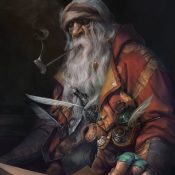
Simply, any practitioner of the magickal arts. There are performance Magicians who create seemingly “impossible” illusions and feats with sleight-of-hand (“prestidigitation”) and special effects. And there are Ceremonial Magicians who create elaborate rituals designed to alter and transform the consciousness of themselves and others.

BARD
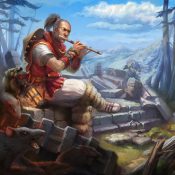
In ancient Celtic tradition, Bards were part of the Orders that were headed by the Druids. Bards were the poets, musicians, and singers of the epic songs and tales that conveyed the history and lore of the people. At a time when very little was written down, a Bard was expected to memorize enormous amounts of poetry, songs, and stories.

MYSTIC
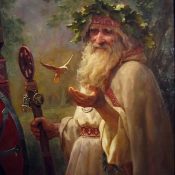
A Mystic (from Greek mystai, meaning someone who has been initiated into secret Mysteries) is a person whose profound spiritual or “otherworldly” experiences have given them a deep intuitive comprehension or vision of hidden truths and awareness. Such experiences are usually indescribable and therefore beyond rational human understanding and explanation.

SAGE
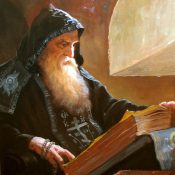
A Sage is an elderly person of sound judgment, who has achieved wisdom through reflection and experience. The term is used for a savant, an expert, a scholar, and a learned philosopher or teacher, such as Lao-Tzu or Socrates. Sagacity means wisdom, and wise counsel is called “sage advice.” Although Sages are usually considered to be men, Saga was a common Latin term for a Sorceress in the Middle A...
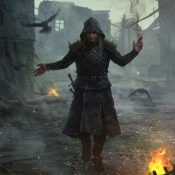

MAGE
This term is often used as a synonym for “Wizard,” especially in a complimentary sense. A Mage may also be called a Magus, which means a master of the magickal arts. The ancient Magi (like the “Three Wise Men” in the Bible) were Zoroastrian Priests originating in Media and Persia (now Iran). This is the root of the word magic (or magick). The term eventually came to be used for wise and powerful m...

VIZIER
: This title comes from Arabic, meaning, “bearer of burdens,” and was given to the chief minister and adviser under the King. The most famous Vizier of ancient Egypt was Imhotep (yes, the “Mummy”), who was the Vizier of Pharaoh Djoser, and the world’s first known Wizard. The title often became synonymous with “Court Wizard,” especially when a Vizier was also renowned for his Wizardry—such as Imhot...


WIZARD
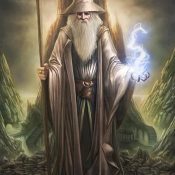
This is from the Anglo-Saxon wysard: “wise one.” A Wizard is a lore-master, especially of arcane (that is, lost or secret) knowledge (hence popular usage such as “computer wizard”). A Wizard is also a magickal practitioner; however, the word is rarely used today to describe a practitioner of Wicca (or Witchcraft)—or a member of any particular faith. Indeed, most (but not all) Wizards tend to be so...

Magickal Folk
Now would probably be a good time to explain some of the different kinds of magickal folks. These terms can be confusing to the unfamiliar, so here is a brief little Glossary. (Also, one essential companion to this Grimoire must be a good dictionary!) An important thing to understand here is that these categories are not mutually exclusive, and any given individual may embody a number of them…inde...