
Author: A Solitary Pagan


Amber Colour Magick
Amber is a pure chroma color found midway between gold and orange on the color wheel. The name “amber” comes from the fossilized tree resin, which appears in a range of yellow-orange-brown-red hues. As a color, amber typically refers to yellow-orange shades. In metaphysical traditions, amber is believed to offer a soothing, gentle energy that is both calming and energizing. It is commo...


Black Colour Magick
Planet: Saturn. Chakra: Base. Black is one of the most powerful colors in magic and symbolism. Use black for binding, reversing spells, repelling negativity, and transformation. It can conceal, create endurance, and be used in place of any other color. Around the world, black means many things: in Africa, it’s age and wisdom; in Western cultures, power, control, mourning, and rebellion; in the Eas...

Tips for getting rid of curses
A curse is a nasty business to be under. While it’s nice to think about the karmic implications of throwing a curse on someone, it can still seriously ruin your day. So, here are some suggestions for getting rid of the nasty things once and for all. Disbelieve – Refuse to believe that the curse exists. Magic is primarily a discipline of the mind, and more specifically of will. If you d...


The Magical Correspondences of Sage
Gender: Masculine Element: Air Planetary Association: Jupiter Element: Earth Several different planets are connected magickally with this herb by different sources. For instance, some, including Culpeper (and those who follow him, such as Cunningham), consider this a Jupiter herb, and it is often a substitute for the very Jovian frankincense in terms of purification. Also, its leaves contain tin, ...
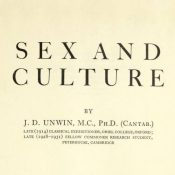

Sex and Culture
In Sex and Culture (1934), Unwin studied 80 primitive tribes and 6 known civilizations through 5,000 years of history and found a positive correlation between the cultural achievement of a people and the sexual restraint they observe. “Sex and Culture is a work of the highest importance,” Aldous Huxley wrote: Unwin’s conclusions, which are based upon an enormous wealth of careful...
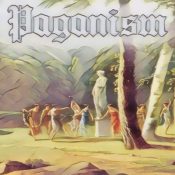

An Innocent, Care-Free Pagan Race
“Look back a little and see what has happened. Nineteen hundred years ago you were an innocent, care-free pagan race. You worshipped countless Gods and Goddesses, the spirits of the air, of the running streams and of the woodland. You took unblushing pride in the glory of your naked bodies. You carved images of your gods and of the tantalizing human figure. You delighted in the combats of th...
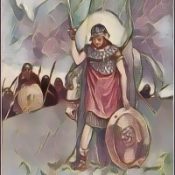

Abcán
In Irish mythology, Abcán (modern spelling: Abhcán) was the dwarf poet and musician of the Tuatha Dé Danann, the early Celtic divinities of Ireland. He was said to have a bronze boat with a tin sail.[1] In the story of the death of the goddess Ruad, Abcán is the dwarf that ferries her from the Otherworld to this one so that she can seduce the human, Aed Srónmár. The sounds of mermaids singing...

Baduhenna
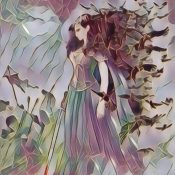
Baduhenna is a Frisian Goddess of war. Sadly nothing much is known about her but she has been described by Tacitus. Badwa is the proto-Germanic word for battle. Interestingly enough, there is also a Celtic battle Goddess known as Badb, she appears in the form of a crow on battlefields to guide fallen warriors. So you can compare Baduhenna with some sort of Valkyrie. Henna means leader/protector,he...

The Principle of Vibration
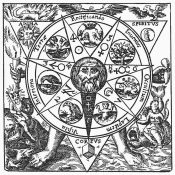
This principle teaches us that all is in motion, nothing is at rest. Everything moves; everything vibrates with its own rate of vibration. Everything is in a constant state of movement and change. Objects, plants, and animals have an energy signature that is often perceived as an aura. Interestingly, when we change our energy or mental state, the world around us changes to match the new vibration....

The Principle of Correspondence
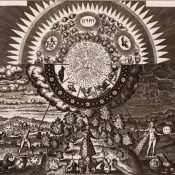
This principle teaches us that “As above, so below. As within, so without.” We do exist on all planes—the astral/spiritual, energetic, and physical—so this principle is a lesson in perspective. When most authors try to explain this “lesson of perspective,” often you will read a riff about holograms, which, I confess, makes me lose whatever is left of my mind. Holograms? Please. You’ll have t...

The Seven Hermetic Principles
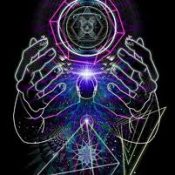
Here are the seven classic Hermetic principles. I kept them as straightforward as possible. The Principle of Mentalism This is the first principle. It states that “all is mind”—that everything exists in the mind of the God/dess, or the divine consciousness. In her book Power of the Witch, Laurie Cabot writes of the first principle that “all creation is composed by the Divine Mind.” In other words,...
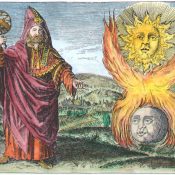

Hermes Trismegistus and the Hermetic Principles
Truth be told, a lot of magick is founded on philosophy. Case in point: the Hermetic principles. The Hermetic principles are a set of philosophical beliefs based upon the ancient writings of Hermes Trismegistus. According to folklore, these principles or laws were originally inscribed upon emerald tablets and were discovered by Alexander the Great when he opened Hermes Trismegistus’s tomb. After t...